Restaurant Fumigation
Food-area safe, inspection-ready, and discreet — built for restaurants
Running a kitchen means every minute counts. Our restaurants fumigation service combines precise, food-area-safe treatments with a documented pest management program that supports your HACCP and food safety audits. From back-of-house prep lines to front-of-house dining areas, we treat, monitor, and document — so you reduce downtime, pass inspections with confidence, and protect your brand.
Fast help today — night & off-hours scheduling
To keep operations smooth, we offer night and off-hours service windows with discreet crews and low-odor options. You’ll get clear pre-service instructions, proper re-entry guidance, and a signed service certificate at handover. Prefer WhatsApp? Call/WhatsApp +92 331 8496210 to request a same-day survey in Karachi and major cities.
At-a-glance assurances
We do not apply chemicals on food or active prep surfaces. Residuals are restricted to non-food-contact zones; gels and baits are targeted to harborages; ULV/cold fogging is used where appropriate for flying insects. Every visit is logged with a device map and corrective actions, helping your team stay audit-ready without the guesswork.
Who We Serve — FOH & BOH Coverage
Restaurants, cafés, bakeries, food courts & hotel kitchens
We design each program around your format: dine-in restaurants, cafés, quick-service/takeaway counters, bakeries and confectioners, cloud/ghost kitchens, food courts, and hotel kitchens. We also support seasonal pop-ups and outdoor dining terraces that need ramp-up mosquito and fly protection during peak months.
Zone-based planning that mirrors your floor plan
Kitchen/BOH: prep benches, dishwash area, drains and grease traps, cooklines, under-counter voids, cold rooms, dry storage, and delivery bays. FOH: pass counters, service stations, salad bars, beverage counters, seating and host areas. Exterior: waste room, bin area, loading bay, and adjacent landscaping. Each zone gets mapped for monitoring devices and treated according to its risk level and re-entry needs.
What this looks like in practice
Typical examples include gel baiting and crack-and-crevice work behind refrigeration, drain bioremediation in dishwash, proofing around delivery doors, UV fly unit placement away from food exposure, and scheduled treatments for outdoor seating during Karachi’s humid, mosquito-heavy evenings.
Why Restaurants Choose Pakistan Fumigation
Minimal disruption, maximum control
We plan services around your operating hours to reduce downtime. Technicians arrive with a clear scope, cover sensitive assets, and coordinate with your duty manager so the line can restart on time. For high-traffic weekends, we can front-load monitoring and schedule treatments mid-week to keep guest service unaffected.
Compliance support that saves time during inspections
Your folder is always inspection-ready. After each visit you receive a service certificate, chemical/MSDS list, device map, trend observations, and corrective actions. We also maintain a sightings and sanitation log so managers can respond quickly if health officers request records.
Programs that scale with your pest pressure
Start with a one-time corrective service (with follow-up where necessary), then choose a maintenance plan — monthly, bi-monthly, or quarterly — tailored to seasonality, menu type (e.g., sweet/dairy, live counters), and site risk (e.g., drains near public sewers, open façades, or shared food courts).
Risks & Pests We Target
Crawling pests
Cockroaches thrive in warm, greasy, and hidden spaces: under ovens, inside cable conduits, under sink lips, and behind refrigerators. We focus on bait-first strategies (to avoid widespread residues in food zones) plus targeted residuals in non-food-contact voids. For persistent pressure, we increase monitoring points and sanitation checks around drains and waste areas. Learn more about our approach to cockroaches here: cockroach control.
Flying insects
Flies contaminate food and trigger guest complaints; drain flies point to organic buildup. We combine UV fly units placed away from prep, drain treatments to remove biofilm, and ULV/cold fogging for dining rooms and perimeters when needed. During dengue season, we add larval source reduction and scheduled outdoor treatments; see our dedicated page for details: dengue & mosquito control.
Rodents
Rodents expose food to contamination and can damage wiring and stock. We map exterior and interior lines, install tamper-resistant stations, and apply proofing (brush strips, mesh, door sweeps) to stop ingress. Trend charts guide adjustments to station density and placement as trash volumes and seasons change.
Stored-product pests (SPPs)
SPPs often enter with infested ingredients. We combine supplier intake checks (e.g., random visual inspection of bags), FIFO discipline, sealed bins, and targeted treatments in storage. Shelf-life rotations and good pallet spacing lower reinfestation risk.
Local realities that raise risk
Monsoon surges can spike fly and mosquito activity; Karachi’s coastal humidity and drainage networks increase cockroach and rodent pressure. For sites near open nullahs or busy waste yards, we step up exterior monitoring, sanitation checks, and door management to maintain control without over-treating interior food zones.
Note: We never apply chemicals on food or active prep surfaces. Food-contact areas are cleaned and sanitized by your team after re-entry as per our post-service guidance.
HACCP-Aligned IPM Program for Restaurants
Inspection & Risk Mapping
Every restaurant begins with a structured site survey that mirrors your floor plan. We map prep lines, dishwash, drains and grease traps, cooklines, under-counter voids, cold rooms, dry storage, bin yards, loading bays, terraces, and guest areas. Each zone is rated for pest risk, food exposure, and re-entry timing, so treatments stay effective without disrupting service. We pay special attention to Karachi realities such as humid back-alleys, shared food courts, and sewer-adjacent drains that raise cockroach and rodent pressure. Your duty manager receives a simple diagram that shows where devices and treatments will be placed and which staff actions reduce re-infestation.
Where relevant, we also review SOPs for cleaning, waste rotation, supplier intake, and stock storage. This helps align our plan with your internal audits and any HACCP or international food-safety playbooks your brand follows. If you operate multiple outlets, we standardize the survey so reports are comparable across locations. The outcome is an IPM baseline: what to monitor, how often to treat, and how to document, all customized to your menu, hours, and footfall.
Inspection & Risk Mapping
Every restaurant begins with a structured site survey that mirrors your floor plan. We map prep lines, dishwash, drains and grease traps, cooklines, under-counter voids, cold rooms, dry storage, bin yards, loading bays, terraces, and guest areas. Each zone is rated for pest risk, food exposure, and re-entry timing, so treatments stay effective without disrupting service. We pay special attention to Karachi realities such as humid back-alleys, shared food courts, and sewer-adjacent drains that raise cockroach and rodent pressure. Your duty manager receives a simple diagram that shows where devices and treatments will be placed and which staff actions reduce re-infestation.
Where relevant, we also review SOPs for cleaning, waste rotation, supplier intake, and stock storage. This helps align our plan with your internal audits and any HACCP or international food-safety playbooks your brand follows. If you operate multiple outlets, we standardize the survey so reports are comparable across locations. The outcome is an IPM baseline: what to monitor, how often to treat, and how to document, all customized to your menu, hours, and footfall.
Monitoring & Trend Reporting
We install and number glue boards, cockroach monitors, and tamper-resistant rodent stations at mapped points. UV fly units are positioned away from food exposure and guest sightlines to avoid contamination risks while still intercepting flies. Each device is logged by zone so you can see patterns over time—e.g., “drain flies peaking near dishwash” or “rodent activity near delivery bay at night.” Your manager receives trend notes and photos as needed, which makes internal reviews and health inspections faster and calmer.
As seasons shift, especially through monsoon months, we adjust visits and device density rather than relying on a one-size-fits-all schedule. The goal is clear: fewer surprises, faster corrective actions, and less chemical load in sensitive areas. This data-driven approach is at the heart of restaurant pest control services that actually hold up during rush hours and high-traffic weekends.
Targeted Treatment & Corrective Actions
Crack-and-crevice gel baiting targets cockroach harborages behind refrigeration, inside equipment stands, and around cable conduits—precisely where sprays aren’t appropriate in food zones. Residual sprays are limited to non-food-contact voids, wall-floor junctions in storage and waste areas, and perimeters to create barriers without compromising food safety. Where flying insects are active, ULV/cold fogging or space treatments are scheduled for off-hours with clear re-entry times to protect staff and guests. For rodents, we combine proofing and trapping with secure bait stations outdoors or in designated non-food areas, reducing the chance of contamination.
Corrective actions are practical and specific: door sweep replacements, mesh installation over vents, improving bin lids and washdown, drain bioremediation schedules, and stock binning/rotation. This HACCP-aligned approach blends chemistry, engineering, and sanitation—preventing repeat outbreaks while maintaining audit-ready hygiene.
Kitchen Fumigation & Disinfection
Pre-Service
Before we arrive, your supervisor assigns one point of contact and confirms shut-down windows for cooklines, tandoors, and gas pilots. Exposed food, utensils, and smallwares are covered or stored; prep surfaces are cleared; open ingredients are sealed in bins; and sensitive electronics are wrapped. Dishwash and drains are accessible for treatment, and waste is removed to avoid attracting pests during service. Cold rooms and dry storage areas are tidied to allow inspection behind pallets and racking.
We share a short, printable checklist so staff can finish prep in 15–20 minutes. This keeps the session focused on actual treatment rather than last-minute clearing. Where there are allergy considerations, we note them in advance and select low-odor or botanical options where feasible. The aim is smooth handover, minimal downtime, and a predictable reopening timeline.
During Service
Technicians start with a quick verification walkthrough and place signage to mark treated zones and re-entry times. We prioritize crack-and-crevice gel work for cockroach fumigation in restaurants, drain dosing to remove biofilm that feeds drain flies, and residuals restricted to non-food-contact voids. Where needed, ULV/cold fogging is performed for FOH or perimeters, and only after BOH baiting is secured and covered. Rodent devices are deployed and mapped; proofing gaps are flagged for your maintenance team or handled on the spot if agreed.
Every action is logged against the device map and risk plan. If we discover conditions that can undo a good treatment—like a broken door brush or a persistently wet mop station—we record an immediate corrective recommendation. This documentation is what makes kitchen fumigation for restaurants more than a one-off spray; it becomes an integrated hygiene upgrade.
Post-Service Reopening
Once re-entry time passes, staff wipe down food-contact surfaces with your usual sanitizer, reinstall smallwares, and restart equipment. Our lead tech reviews the service certificate, the chemicals list (actives and usage areas), and any follow-up items with your duty manager. We also agree on sighting-log practices and escalation steps if pests are observed between visits. For multi-unit brands, we standardize the post-service checklist so your area manager sees consistent paperwork across locations.
Where ULV was used in guest areas or patios, we share ventilation guidance and opening procedures. If a follow-up is recommended—common after heavy infestations—we set a short window to re-check hot spots. This is how restaurant disinfection and fumigation stays practical and audit-friendly without sacrificing service quality.
Safe Treatment Options
Food-Area-Appropriate Gels & Baits
Gel baits are our primary tool in active kitchens because they target cockroach harborages without creating airborne residues. We place them inside hinges, along equipment stands, and behind fixed counters—out of sight and out of food contact. For ants, we use protein or sugar-based baits depending on species, placing them along trails in non-contact zones to draw colonies out of voids. This approach supports HACCP compliant pest control for restaurants by reducing indiscriminate spraying where food is handled.
Where a customer’s SOP references “FDA-style” or international food-safety documentation, we align our records with that expectation: actives used, areas treated, and re-entry intervals. We do not apply any product on food or active prep surfaces, and we specify exactly where staff must wipe down after re-entry. The result is thorough control with minimal disruption and no confusion for auditors.
Residual Sprays in Non-Food-Contact Zones
Residuals are effective when used correctly—on wall-floor junctions, storerooms, under-counter voids, exterior perimeters, and waste rooms. We avoid air handling intakes and active prep benches and keep applications confined to hard, non-contact surfaces. For restaurant deep cleaning and pest control cycles, we often pair residuals with scheduled sanitation in those same zones, breaking the food-moisture-harborage triangle that supports pests.
In sites with high night traffic, we combine residuals with physical controls such as door sweeps, mesh on vents, and brush seals on delivery doors. This reduces reliance on chemistry over time and lowers the chance of pests re-entering from back alleys or shared corridors. These measured steps are what make commercial fumigation services for restaurants both effective and food-safe.
ULV/Cold Fogging & Perimeter Programs
For houseflies, fruit flies, and mosquitoes, space treatments are considered when monitoring shows activity above thresholds or when outdoor dining ramps up. ULV/cold fogging is scheduled after closing with clear ventilation instructions and return-to-service times. In dengue season, we supplement with source reduction and larvicidal measures around planters, drains, and rooftop water zones to keep populations down. For hotels or restaurants with terraces, we can integrate insect killer spray service timing so it never collides with guest events.
If you prefer eco friendly fumigation for restaurants, we can prioritize low-odor or botanical options in FOH and use mechanical and sanitation controls more heavily in BOH. The mix is tailored to your risk profile and the comfort of staff and guests. What doesn’t change is our rulebook: no applications on food or active prep surfaces, and crystal-clear documentation after every visit.
Related services you might pair with this program: cockroach control and dengue/mosquito control (see our earlier sections for links). For quotes or scheduling, call/WhatsApp +92 331 8496210.
Rodent Control for Food Premises
Survey, Proofing & Secured Devices
Effective rodent control in restaurants starts outside: back alleys, bin yards, loading bays, soffits, and drainage lines. We walk the perimeter to identify ingress points, gnaw marks, rub tracks, droppings, and vegetation that may shelter rodents. Inside, we check dry storage, under-counter voids, false ceilings, and dishwash areas. Proofing is step one—brush strips on doors, mesh on vents, sealing utility penetrations—so you’re not fighting a constant re-infestation.
We deploy tamper-resistant bait stations outdoors and, where appropriate, traps in designated non-food areas indoors. All devices are numbered and plotted on a site map, with placement designed to intercept activity along walls and travel paths without risking food contact. This mapping makes it simple for your managers to verify controls during internal checks and for health officers during inspections.
Monitoring Frequency & Trend-Led Adjustments
Visit frequency reflects real pressure. If your Karachi outlet sits near open drains or a busy food court, we begin with tighter intervals and taper down as trend data improves. Each visit includes a quick device check, bait condition review, and sanitation notes (e.g., overflowing bins or gaps under doors). If captures spike after monsoon rains or trash schedule changes, we adjust station density and proofing priorities immediately.
Food-Safe Practice
We never place baits in food-prep zones. Traps used indoors are enclosed or positioned in non-contact areas, with daily checks during high activity. Staff get a short, practical briefing on refuse management and night closing routines to keep rodents out—simple steps like securing lids, pulling bins off walls, and dry-mopping around back doors reduce attractants without slowing service.
Fly Management for FOH & BOH
UV Fly Units: Placement That Works
UV fly units are effective when positioned correctly—away from food and guest sightlines, and never above prep or open display. We recommend units near entry vestibules, service corridors, and dishwash exits to intercept flies where they enter. Glue-board types make monitoring easier; counts tell us whether entry points, waste handling, or seasonality are driving activity.
Drain & Waste Hygiene
Drain flies breed in organic film inside floor and sink drains. We include bioremediation dosing schedules for dishwash and bar drains, pair them with periodic mechanical cleaning, and track outcomes in the service record. Outdoors, bin pads get on/off schedules: wash, dry, treat perimeter, then replace with lids closed. These small, consistent steps cut fly complaints in both BOH and dining areas.
Space Treatments for Peaks & Events
Where monitoring shows spikes—monsoon months, outdoor brunches, or evening terraces—we schedule off-hour space treatments (ULV/cold fogging) with documented re-entry times. For restaurants preferring an insect killer spray service cadence, we time perimeters and outdoor seating areas so chemical use is targeted and never conflicts with meal periods. The aim is comfort for guests and compliance for audits, not blanket spraying.
Dengue & Mosquito Programs for Outdoor Dining
Source Reduction Survey
Mosquito control succeeds when breeding sites disappear. We inspect rooftop tanks, planters, gutters, HVAC trays, and low spots that hold water after rain. Each hotspot is tagged in the report with a corrective action—drain, cover, fill, or treat—so staff can prevent re-accumulation between our visits. This is especially important in Karachi’s humid months when covers blow off and puddles form along service alleys.
Larviciding & Scheduled ULV
When water can’t be eliminated, we apply larvicidal measures appropriate to the setting and schedule ULV fogging for terraces, rooftops, and gardens outside trading hours. Re-entry guidance is shared in writing so opening teams know exactly when to reset outdoor tables and service stations. For chains operating in multiple cities, we align schedules to local dengue advisories and guest traffic patterns.
Guest Comfort + Documentation
We balance comfort with transparency. Your visit record includes treatment areas, actives used, and timing—useful when guests ask about safety or when managers must show due diligence during allergy or sensitivity queries. Need rapid deployment for a weekend event? Message us and we can stage perimeter treatments without interrupting kitchen prep: https://pakistanfumigation.com/contact-us/.
Eco-Friendly & Low-Odor Options
When to Choose Botanical/Low-VOC Paths
Eco-forward options are best for FOH refreshes, boutique cafés, or spaces with strong fragrance policies. We can emphasize bait-first approaches in BOH, increase physical and sanitation controls, and keep residuals confined to non-food-contact perimeters with low-odor profiles. For mosquitoes and flies, we focus more on source reduction, traps, and screening to reduce chemical reliance.
Trade-Offs & Good Outcomes
Eco-friendly does not mean “less effective,” but it often requires steadier monitoring, better proofing, and staff participation (bin hygiene, door discipline, drain maintenance). We’ll be candid about what’s feasible for your floor plan and operating hours. The result is a sustainable, inspection-ready program that protects staff comfort and guest experience without over-treating your workspace.
Quick note: We never apply any product on food or active prep surfaces. Food-contact surfaces are wiped by your team after re-entry as standard procedure. For scheduling and tailored plans, call/WhatsApp +92 331 8496210 or use our contact page above.
Plans & Pricing
One-Time Corrective Service
If you’re facing an active outbreak—cockroaches in prep, flies in dishwash, or rodents near the bin yard—we begin with a corrective service focused on elimination and stabilization. Depending on pressure and site size, a short follow-up within 15–30 days may be scheduled to confirm results. This option suits newly opened outlets or kitchens coming off seasonal closures.
Pricing is based on factors that materially affect scope: total area and floor count, pest pressure, hours of operation, BOH/FOH complexity, and whether outdoor dining or rooftop service areas need attention. We do not quote blind; an on-site survey ensures you only pay for what you need—nothing padded, nothing missed.
Maintenance Contracts
For restaurants that want steady, audit-friendly control, we offer planned programs with predictable visits and documentation. Each visit includes device checks, trend notes, targeted treatment, and corrective actions, with extra callouts available if activity spikes. Contracts are customized by outlet type—café, bakery, quick service, fine dining, cloud kitchen—or multi-site brands needing a standard pack of documents per location.
Night-service surcharges are minimized by smart scheduling, and we’ll align visit days with your slower periods. The outcome is simple: consistent control, no surprise paperwork before inspections, and fewer guest-facing incidents.
Emergency & Event Support
Short-notice problems happen: a shipment arrives with stored-product pests, a terrace needs mosquito control before a private event, or a drain fly bloom hits during monsoon week. We can stage corrective callouts within your off-hours and provide same-day documentation so managers can brief teams with confidence.
Coverage & Response
Karachi-Focused, Pakistan-Wide Scheduling on Request
Our home base is Karachi—C-40, Bantva Nagar, Liaquatabad Town—serving restaurants, cafés, and hotel kitchens across the city with night and weekend availability. We also coordinate scheduled programs for chains in major metros across Pakistan on request, ensuring outlet-to-outlet consistency in both treatment and paperwork.
Discreet, Professional, and Safety-First
Teams are trained for low-odor work and discreet entry. We use signage and cordon-off markers during service and include re-entry intervals in writing. Where permits or building access are required (malls, food courts), we liaise with your facility manager to ensure smooth access and timely completion.
What You Receive After Every Visit
Inspection-Ready Records
Every service is documented with: a signed service certificate, chemical/MSDS list, device map by zone, trend notes (with counts from monitors where relevant), and corrective actions. Photos are added when helpful for maintenance or training.
Clear Guidance for Your Staff
We leave a simple, practical action list: which drains to dose and when, door-sweep replacements, bin hygiene notes, and any stock or storage adjustments. For multi-site brands, the same format is used across outlets so area managers can compare performance quickly.
Assurance Between Visits
If pests reappear between scheduled visits, we escalate frequency or perform a targeted callout according to your contract terms. The goal is continuous control without resorting to blanket spraying—your kitchen stays safe, clean, and ready for service.
All Services
Call Us Today
(+92) 331 8496210
We offer pest control services for individuals, businesses, and corporations. Contact us for a free inspection.
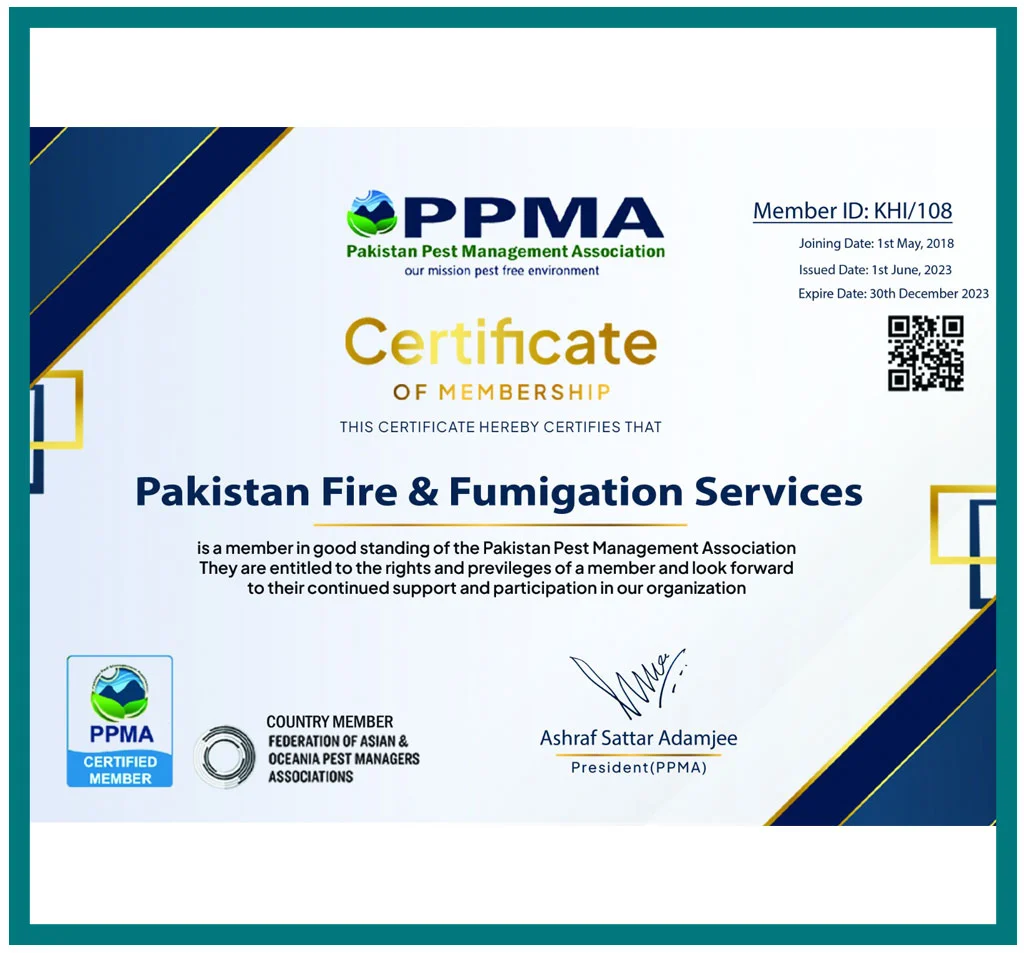
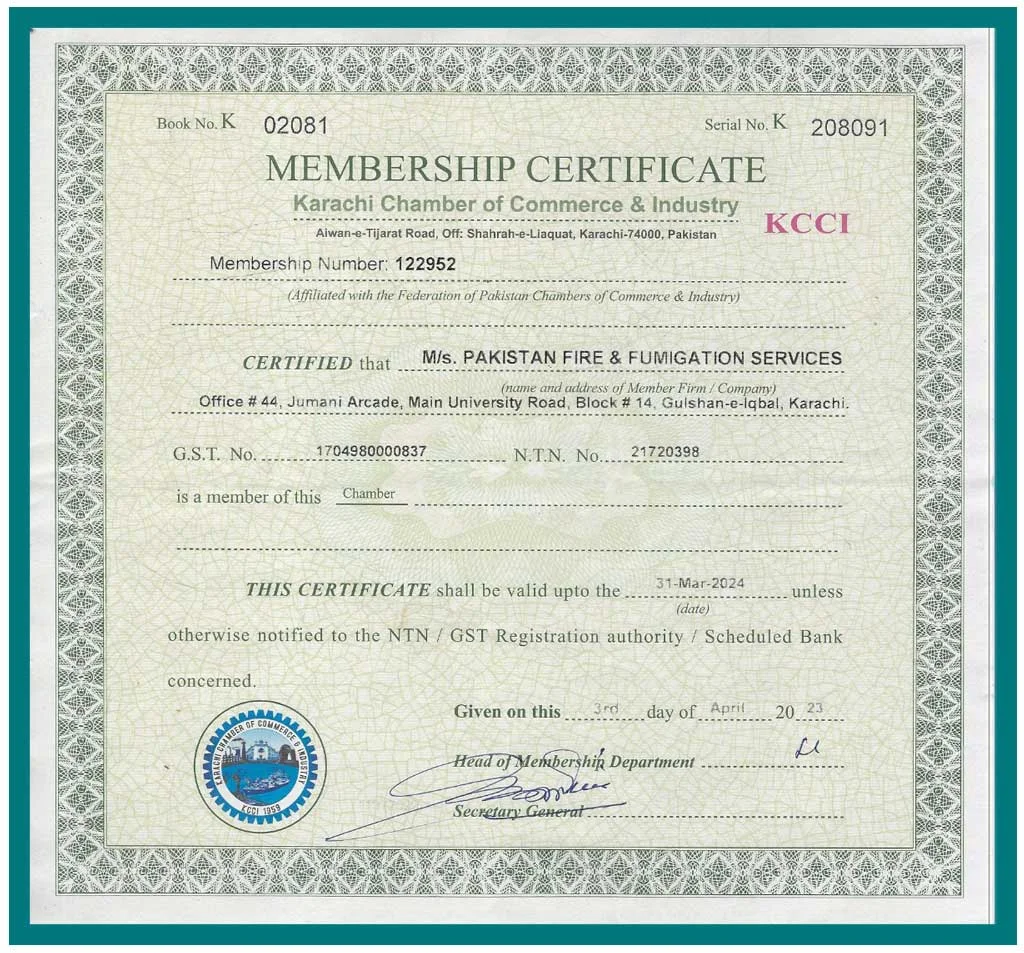
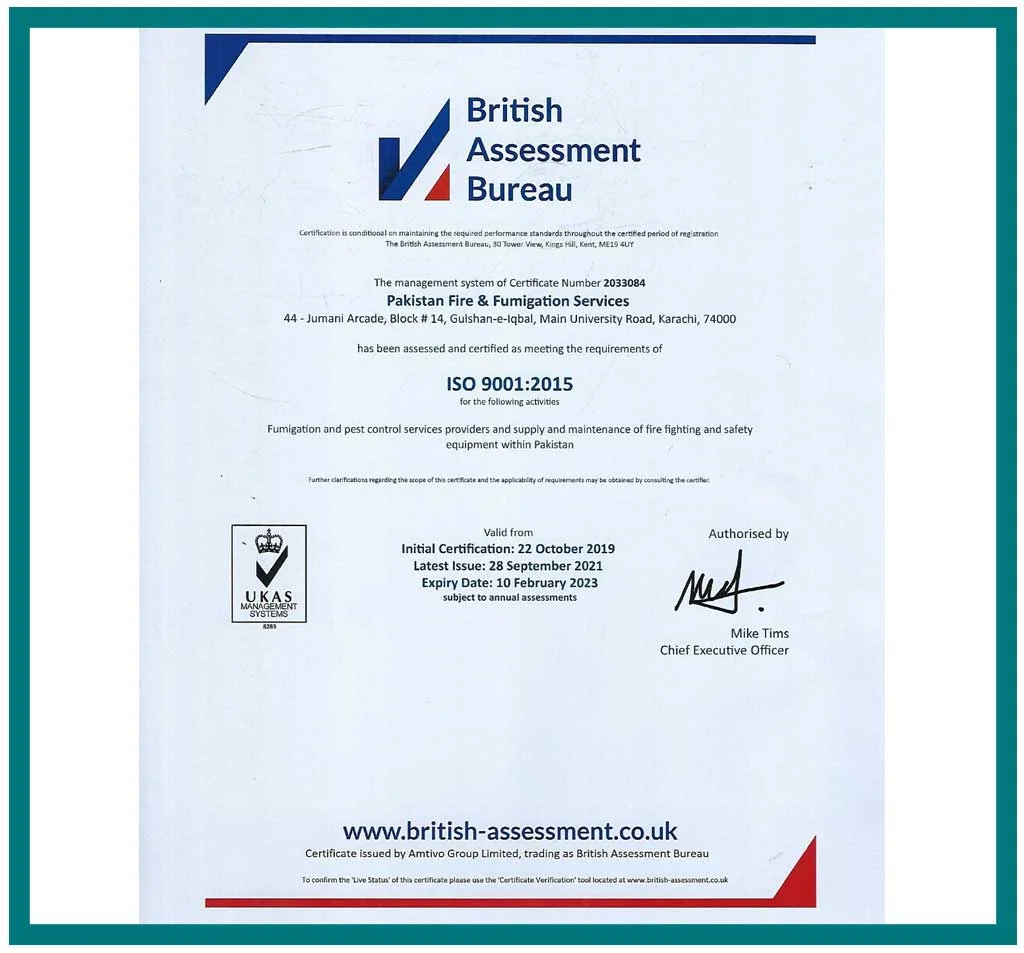
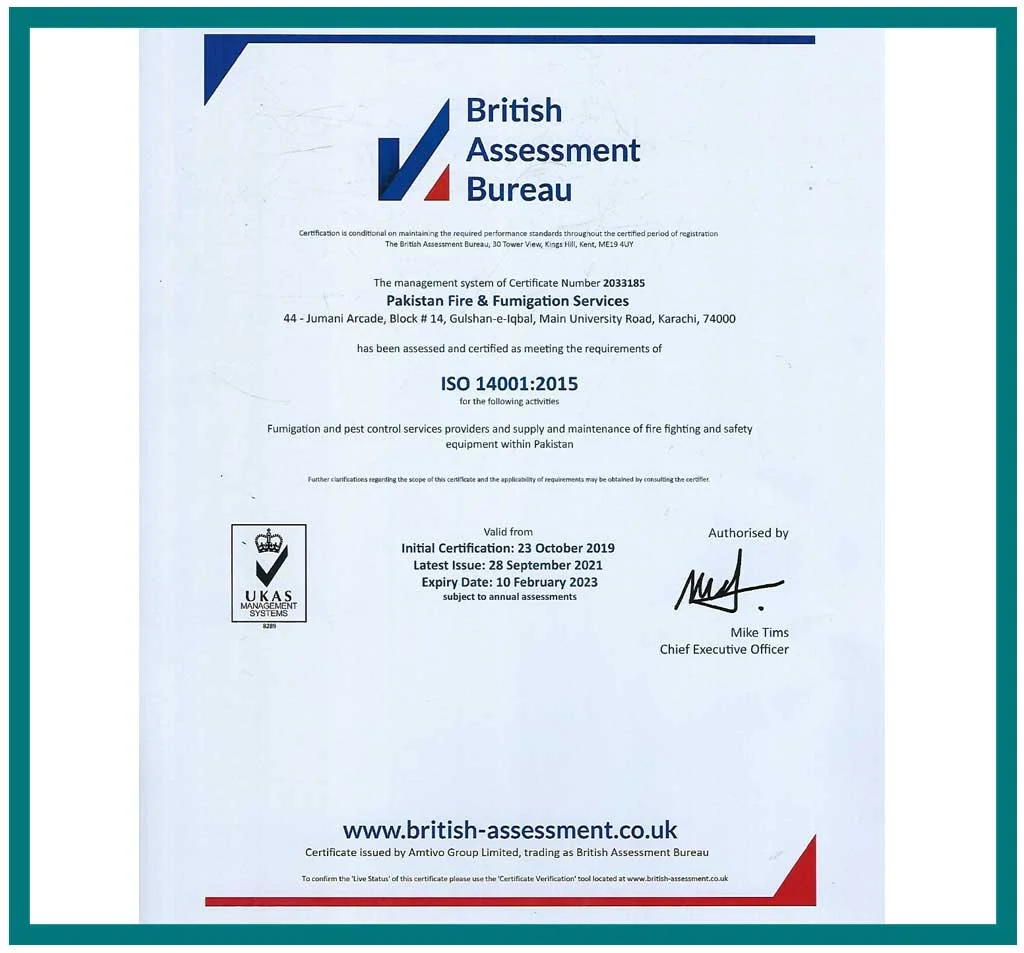
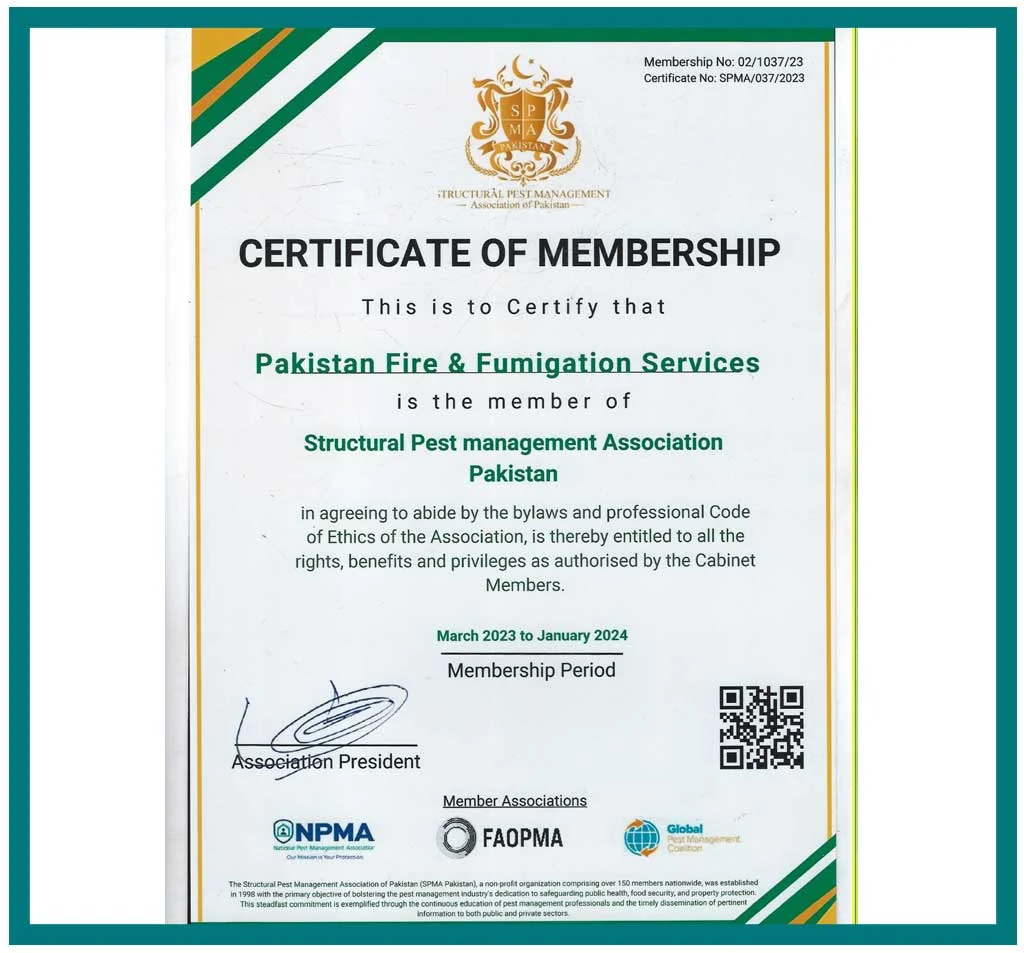
Our Certificates
What Our Clients Say
Muhammad Abdullah — 2022-06-02
Pakistan Fire & Fumigation is one of the best companies, offering mind-blowing customer service across Pakistan.
NAJAM ISLAM — 2022-06-02
Best fumigation in the town i must sayyy
Anas Amir — 2022-06-04
I have tried their fumigation service and hands down they are the best in karachi.
Javed Khan — 2022-06-05
Expert teams and very cooperative staff best work done in my house
Rafay Paracha — 2022-06-06
Best fumigation servies in Karachi! One should really try their services for a healthier environment.
Ahmed Shah — 2022-06-01
Best fumigation in town, I must say!