IPM Services in Karachi
Pakistan Fumigation Services provides IPM services in Karachi for properties that need more than a quick spray. Integrated Pest Management is a planned way to control pests through inspection, prevention, monitoring, targeted treatment, and practical aftercare. It helps homes, offices, restaurants, warehouses, factories, schools, clinics, and apartment buildings manage pest activity with a clearer long-term plan.
Get Free Inspection
Quick quote request
Karachi properties often face repeat pest pressure because buildings are close together, food storage is common, drainage lines stay active, and pests can move through shared walls, roof spaces, kitchens, basements, shops, and service areas. Our IPM service starts with the real cause of the problem, not only the visible pest. This helps reduce unnecessary chemical use and supports safer, more effective pest control decisions.
Call or WhatsApp Pakistan Fumigation Services at +92 331 8496210 to discuss your pest issue, property type, and preferred inspection time.
Integrated Pest Management for Karachi Properties
Integrated Pest Management, also called IPM, combines different pest control methods into one practical plan. The goal is to identify the pest, understand why it is active, remove the conditions that support it, and apply treatment only where it is needed. This approach works well for Karachi properties where cockroaches, rodents, ants, flies, mosquitoes, termites, bed bugs, lizards, silverfish, and stored-product insects can return if the source is not addressed.
IPM is useful for both residential and commercial properties because it does not depend on one method alone. A home may need kitchen checks, drain treatment, gap sealing advice, and a targeted cockroach plan. A restaurant may need monitoring points, waste-area control, night-time treatment planning, and staff guidance. A warehouse may need rodent entry checks, pallet-area inspection, and storage-risk control.
What IPM means in simple terms
IPM means we look at the property as a whole. We inspect the affected rooms, pest hiding places, food and water sources, entry points, storage areas, drainage lines, wall gaps, and outdoor surroundings. Then we choose the right mix of control methods for the pest and the site.
This may include sanitation guidance, sealing recommendations, bait placement, gel treatment, residual application, traps, monitoring, and follow-up advice. The exact plan depends on the pest, infestation level, building layout, and safety needs of the people using the property.
How IPM is different from routine spraying
Routine spraying can reduce visible pest activity for a short time, but pests often return when the source remains active. IPM focuses on the reason pests are entering, feeding, hiding, or breeding. It is more suitable when a property has repeat pest complaints, food-handling areas, shared residential spaces, or hygiene-sensitive operations.
IPM does not mean chemicals are never used. It means treatment is selected carefully and applied with purpose. The plan may use chemical and non-chemical methods together, with a focus on control, prevention, and safer use of the treated space.
Why Karachi Needs IPM Instead of Only Reactive Pest Control
Karachi has many property types in a compact urban setting. Apartments, bungalows, restaurants, offices, shops, warehouses, and factories often sit close to each other. Pests can move from drains, waste areas, storage rooms, neighbouring units, loading bays, open plots, and utility lines. A one-time treatment may help, but it may not solve the cause of repeat activity.
IPM gives property owners and managers a clearer way to handle pest pressure. It helps identify risk points before the infestation becomes harder to control. It also gives families, staff, tenants, and customers better guidance on what to do before and after service.
Homes, flats, and apartment buildings
In Karachi homes, cockroaches may hide inside kitchen cabinets, under sinks, near floor traps, behind appliances, and around drain openings. Rodents may enter through gaps near pipes, balconies, parking areas, roofs, or storage rooms. Bed bugs can spread through luggage, furniture, shared accommodation, and visitor movement.
IPM helps residential customers understand the pest and the likely source. The plan can include targeted treatment, clutter reduction guidance, drain care, food storage advice, and follow-up recommendations. This is helpful for families who want control without repeated unnecessary spraying.
Restaurants, shops, and offices
Commercial properties need pest control that protects daily operations. A pest sighting in a restaurant, bakery, cafe, office pantry, retail store, or clinic can affect hygiene, staff confidence, customer trust, and business reputation. IPM helps these places manage pest risks through planned checks and practical control steps.
For food businesses, the main issues often include cockroaches near warm equipment, flies near waste points, ants near sweet items, and rodents near storage or loading areas. IPM looks at these areas as part of one system, so the treatment plan supports cleaner routines and better prevention.
Warehouses, factories, and storage units
Large properties need a different approach. Warehouses and factories may have loading doors, pallets, cartons, drains, roof gaps, electrical rooms, and quiet corners where pests can hide. Stored goods can attract insects and rodents if monitoring and housekeeping are weak.
IPM helps industrial and storage sites by mapping risk areas, placing suitable controls, and giving the team guidance for prevention. It can support routine pest management for businesses that need better hygiene control, safer storage, and fewer surprise infestations.
Pest Problems Managed Through IPM
IPM is not limited to one pest. It is a flexible pest management method that can be adjusted for homes, commercial kitchens, offices, storage spaces, and industrial facilities. The first step is always correct pest identification because each pest behaves differently and needs a different control plan.
Pakistan Fumigation Services can guide customers after reviewing the pest signs, affected area, and property type. The plan may be simple for a small home issue or more structured for a restaurant, warehouse, factory, or multi-floor building.
Cockroaches, ants, and crawling insects
Cockroaches are common in Karachi kitchens, bathrooms, restaurants, pantries, drains, and service areas. They hide in warm, dark, and moist places. Ants, silverfish, and other crawling insects may also appear where food, moisture, paper, or cracks are present.
An IPM plan for crawling insects can include inspection, gel or bait placement, spot treatment, drain attention, cabinet checks, and hygiene advice. The goal is to reduce visible activity and make the area less attractive for future pest movement.
Rodents and entry-point problems
Rodents need food, water, shelter, and access. They may enter from open drains, broken covers, wall gaps, pipe routes, shutters, roof areas, basements, and storage sections. Signs may include droppings, gnaw marks, urine smell, scratching sounds, damaged packaging, or footprints in dusty areas.
IPM for rodents focuses on inspection, entry-point identification, control placement, and prevention guidance. Treatment alone is not enough when gaps remain open or food waste is easy to access. A planned approach helps reduce future activity.
Flying insects and hygiene-sensitive areas
Flies and mosquitoes can become a major concern near drains, standing water, waste areas, kitchens, outdoor seating, washrooms, and damp corners. They can disturb families and create hygiene concerns for food businesses and workplaces.
IPM checks the breeding and attraction points before treatment. The plan may include waste-area advice, drain attention, water-source reduction, targeted application, and monitoring. This gives better results than treating only the insects seen in the air.
Our IPM Process in Karachi
A good IPM service starts with inspection and clear communication. Our team reviews the pest issue, the property type, the affected sections, and the safety needs of the people using the space. This helps us recommend a treatment plan that suits the site rather than using the same method everywhere.
The process may vary between a home, restaurant, office, warehouse, factory, or school. Some sites need urgent control first. Others need monitoring and prevention because pests return from hidden sources. We explain the service steps before treatment so the customer knows what to expect.
1. Site inspection and pest identification
We inspect the property to identify the pest, activity level, hiding places, and possible source. This includes checking kitchens, washrooms, drains, storage rooms, wall gaps, ceilings, cupboards, equipment areas, loading sections, and outdoor surroundings where relevant.
Correct identification prevents wrong treatment. For example, cockroach control is different from rodent control, and bed bug treatment is different from termite work. IPM starts with this clarity.
2. Risk mapping and prevention advice
After inspection, we explain the main risk points. These may include food residue, water leakage, open drains, wall gaps, poor storage, clutter, waste handling, carton buildup, or access from neighbouring spaces. Karachi properties often have more than one risk point, especially in mixed-use buildings.
We give practical prevention guidance that the customer can follow. This may include sealing advice, cleaning routines, storage changes, drain care, waste handling, and access control for treated areas.
3. Targeted treatment plan
We select the treatment method based on the pest and the site. The plan may include bait, gel, traps, residual treatment, drain treatment, spot application, or other suitable pest control methods. We aim to apply treatment where it is needed instead of treating every surface without reason.
For homes, we consider family routines, children, pets, kitchen use, bedrooms, and ventilation. For businesses, we consider working hours, staff movement, stock, food areas, equipment, and customer-facing spaces.
4. Monitoring and follow-up guidance
IPM does not end when treatment is applied. Monitoring and aftercare help confirm whether pest activity is reducing and whether new activity is appearing from another source. Some properties may need a planned schedule, especially food businesses, warehouses, factories, and multi-unit buildings.
We guide customers on what they may see after treatment, what to avoid, and when follow-up may be needed. This helps maintain control and reduces the chance of repeat infestation.
IPM for Homes, Apartments, and Residential Buildings
Residential IPM is useful when pests keep returning after cleaning or routine spray. Many Karachi homes face cockroach activity in kitchens, ants near food storage, mosquitoes near water points, rodents near parking or roof areas, and bed bugs in bedrooms or shared accommodation. IPM helps solve these problems with a safer and more organized plan.
Our residential approach focuses on comfort, practical preparation, and clear aftercare. We explain which rooms need access, what items should be covered or moved, and how long the treated area may need to stay undisturbed. Safety instructions depend on the treatment type and property condition.
Family, children, and pet considerations
Families often want to know whether IPM is safe for children and pets. The answer depends on the pest, treatment method, treated area, and aftercare instructions. We guide customers before starting so they understand what needs to be moved, covered, or kept away from the treated space.
IPM can reduce unnecessary chemical use because it relies on inspection, targeted placement, and prevention. Customers should still follow all preparation and re-entry instructions for the selected service.
Apartment and shared-building concerns
Apartment buildings can have pest movement through shared walls, pipe ducts, drains, stair areas, garbage points, and service shafts. A single flat may receive pests from nearby units or common areas. This is why repeat activity may occur even after one treatment.
IPM helps by identifying whether the issue is limited to one unit or connected to a wider building condition. This gives residents, landlords, and building managers a better way to plan pest control.
IPM for Commercial and Industrial Properties
Commercial IPM is important for properties where pest activity can affect hygiene, customer experience, operations, stored goods, or staff safety. Restaurants, cafes, bakeries, offices, hospitals, clinics, schools, shops, warehouses, and factories all need pest control that fits their use of space.
Pakistan Fumigation Services supports commercial and industrial customers with inspection-based planning and practical scheduling. The service can be arranged around business needs so disruption is reduced where possible.
Restaurants and food-handling areas
Food businesses need special attention because pests are attracted to heat, food residue, moisture, waste, packaging, and storage areas. Cockroaches, flies, ants, and rodents are common concerns in commercial kitchens and service zones.
An IPM plan can include inspection of kitchen equipment, drain areas, waste points, storage rooms, dry goods, service counters, and entry points. It also gives the business clear steps for prevention between visits.
Offices, schools, clinics, and hospitals
Workplaces and public-use buildings need pest control that respects staff, visitors, patients, students, and daily routines. Pest sightings in these spaces can create discomfort and concern, even when the infestation is still small.
IPM helps these properties with careful inspection, targeted treatment, controlled access, and practical aftercare. It is suitable for office pantries, washrooms, reception areas, records rooms, classrooms, staff rooms, and service sections.
Warehouses, factories, and storage sites
Industrial and storage properties need pest management that looks beyond visible insects. Rodent routes, pallet spaces, cartons, loading points, drains, gaps, and low-traffic corners can all support pest activity. A planned program helps reduce these risks.
IPM can support regular monitoring and preventive control for warehouses and factories. This helps protect goods, packaging, equipment, staff areas, and operational hygiene.
When Should You Book IPM Services?
You should consider IPM when pest activity keeps returning, when the property has food or storage areas, or when a one-time spray has not solved the issue. IPM is also useful before pests become a larger problem in a commercial site or shared building.
Book an inspection if you notice any of these signs:
- Cockroaches appear at night, especially in kitchens, bathrooms, cabinets, or drains.
- Rodent droppings, scratching sounds, gnaw marks, or damaged packaging appear.
- Flies gather near drains, waste areas, kitchens, or outdoor seating spaces.
- Ant trails appear near food storage, walls, sinks, or sweet items.
- Bed bug bites, blood spots, or insects appear around beds, sofas, or furniture joints.
- Pest complaints come from tenants, staff, customers, patients, students, or visitors.
- A restaurant, warehouse, office, or factory needs a planned pest control routine.
Why Choose Pakistan Fumigation Services for IPM in Karachi?
Pakistan Fumigation Services is a Karachi-based pest control and fumigation company serving residential, commercial, and industrial properties. The team has field experience across homes, apartments, offices, restaurants, warehouses, factories, hospitals, and retail spaces. This helps us understand how pest issues change from one property type to another.
Our service approach is based on inspection, clear guidance, targeted treatment, and aftercare. We do not recommend the same treatment for every customer. We review the pest issue, site condition, and safety needs before suggesting the right plan.
Inspection-based service planning
We start with the pest problem and property type. This helps us select the correct service and avoid unnecessary treatment. Inspection also helps find hidden causes such as moisture, food access, wall gaps, drains, storage practices, and outdoor entry points.
Customers receive practical guidance before and after service. This improves safety, reduces confusion, and helps the treatment work better.
Karachi service coverage
Our team serves customers across Karachi. We understand the pest pressure in dense residential areas, coastal-side commercial zones, food streets, apartment buildings, industrial pockets, and storage-heavy properties.
For area-specific support, customers can also review service pages for IPM services in DHA, IPM services in Clifton, IPM services in Gulshan-e-Iqbal, and IPM services in Gulistan-e-Johar. We also serve Bahadurabad, Bahria Town Karachi, Malir, Nazimabad, PECHS, Scheme 33, and nearby parts of Karachi.
Support for homes and businesses
IPM needs change by property type. A family home may need a safe kitchen and bedroom plan. A restaurant may need food-area monitoring and service after closing hours. A warehouse may need rodent control and storage-risk checks.
Our team explains what applies to your property. This helps you book the right service instead of guessing between general fumigation, cockroach control, rodent control, or a broader IPM plan.
IPM Service Coverage Across Karachi
This page covers city-level IPM services in Karachi. It is suitable for customers who want a complete pest management plan rather than a single location-specific page. Pakistan Fumigation Services can guide customers from residential, commercial, and industrial areas across the city.
Common service areas include DHA, Clifton, Gulshan-e-Iqbal, Gulistan-e-Johar, Bahadurabad, Bahria Town Karachi, Malir, Nazimabad, PECHS, Scheme 33, Liaquatabad, Saddar, Korangi, North Nazimabad, and nearby localities. If your area is not listed, contact the team and share your exact location for scheduling guidance.
Need a Planned Pest Control Program in Karachi?
If pests keep coming back, do not rely on repeated spraying without inspection. A proper IPM plan can help identify the source, reduce pest-friendly conditions, and apply treatment where it is needed.
Call +92 331 8496210 or request help through the Pakistan Fumigation contact page. Share your pest issue, property type, and Karachi area so the team can guide you better.
All Services
Service Coverage in Karachi
We serve homes, apartments, offices, shops, schools, and commercial properties across Karachi and nearby areas of Karachi.
Call Us Today
(+92) 331 8496210
We offer pest control services for individuals, businesses, and corporations. Contact us for a free inspection.
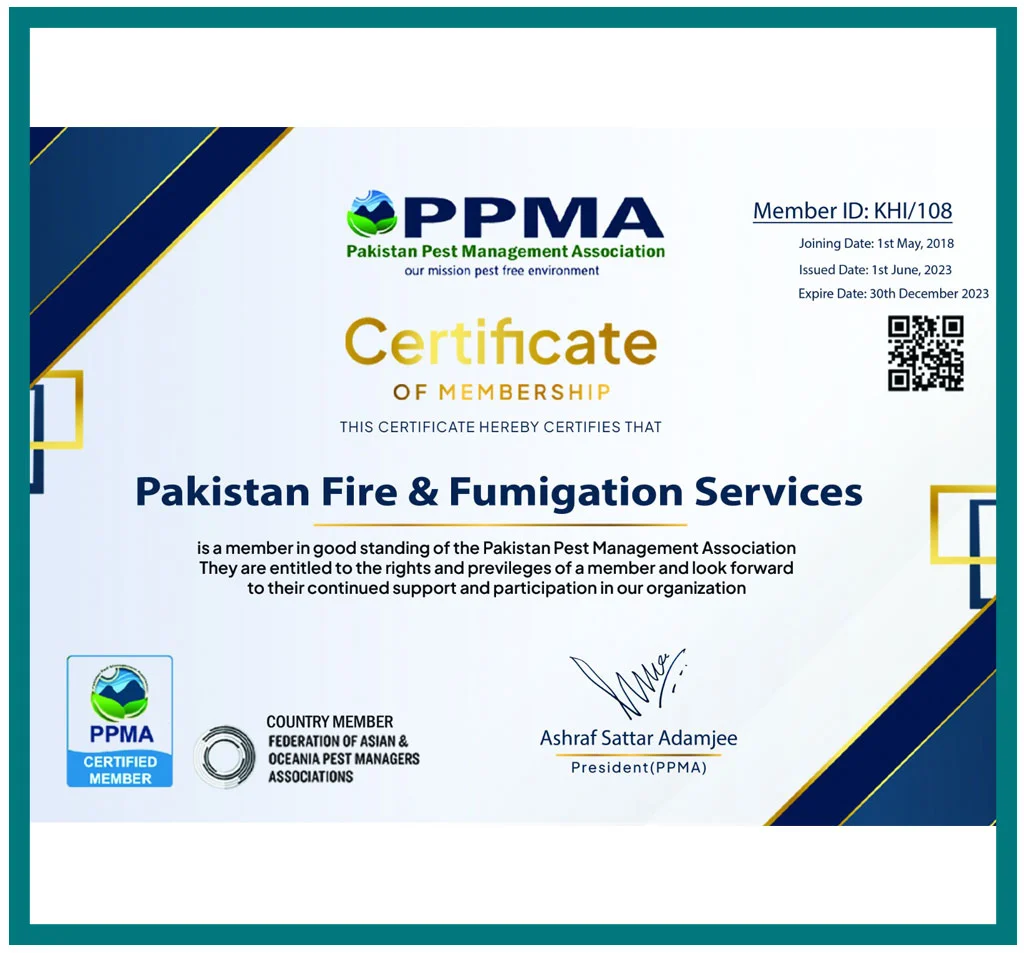
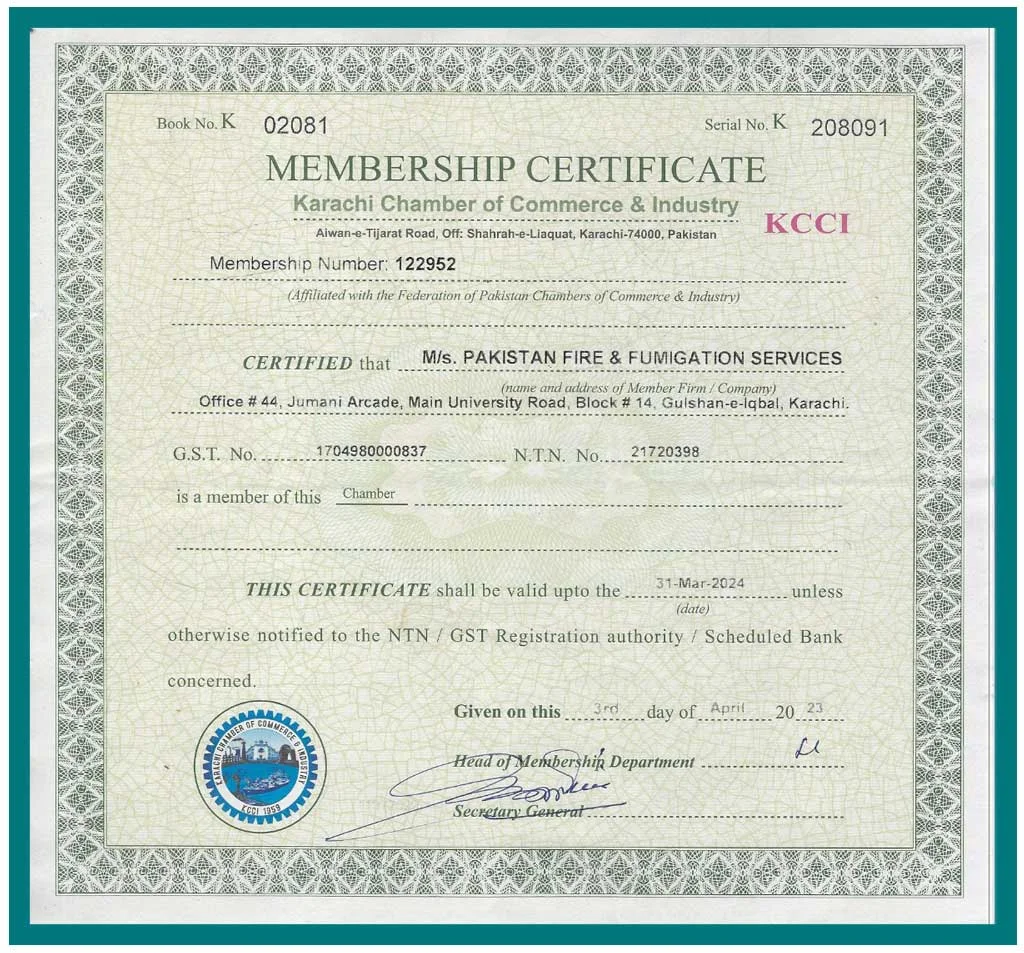
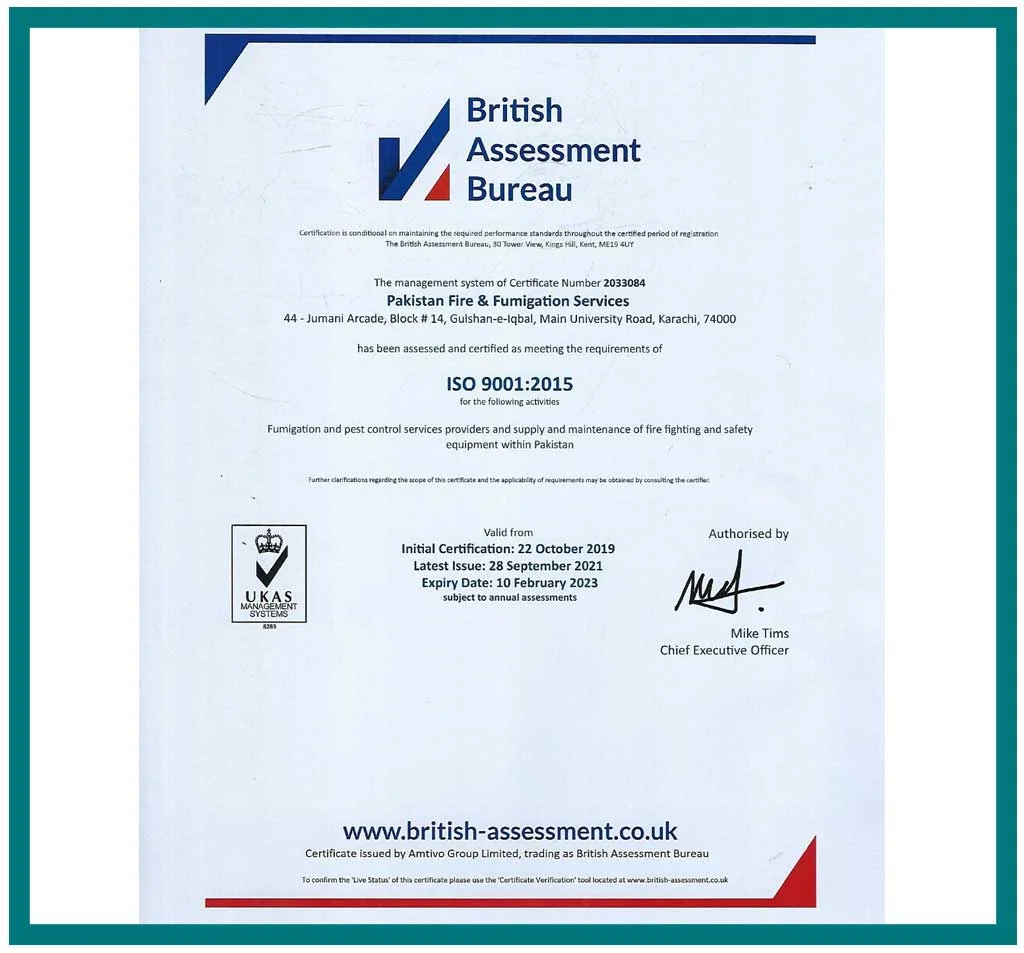
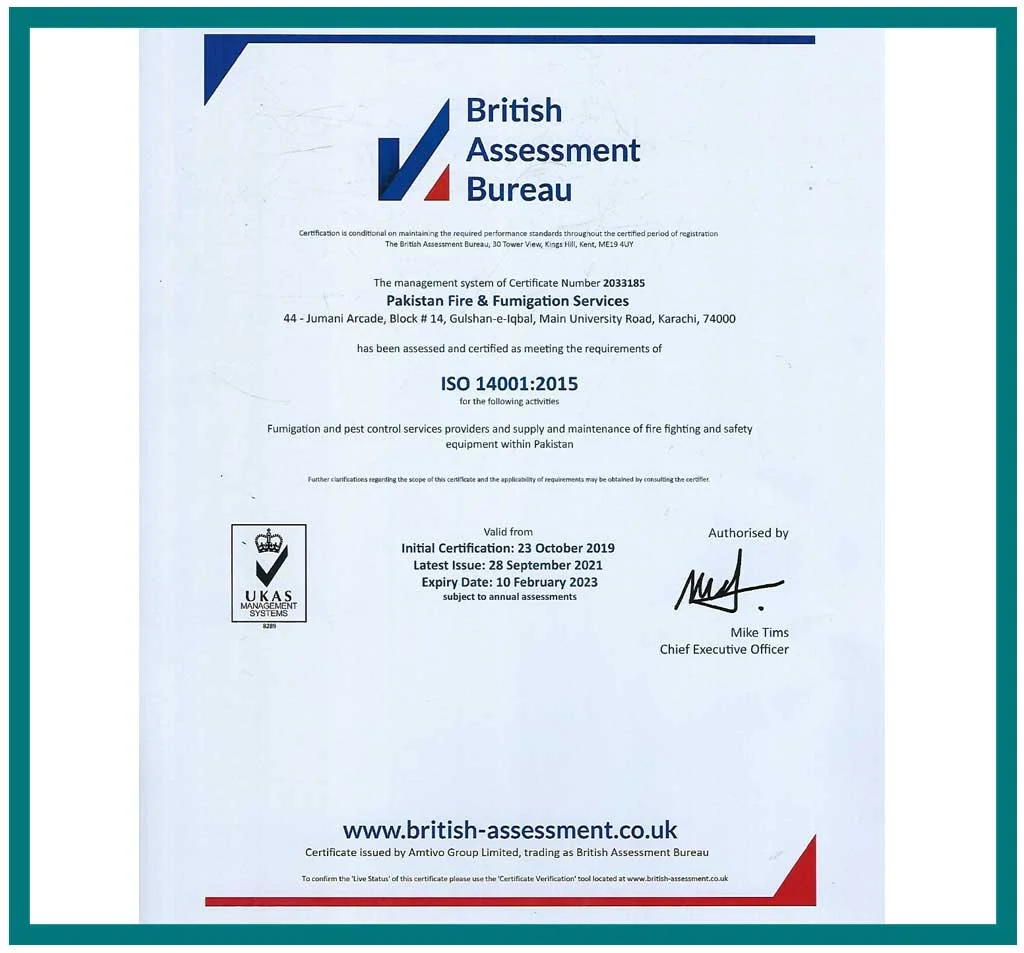
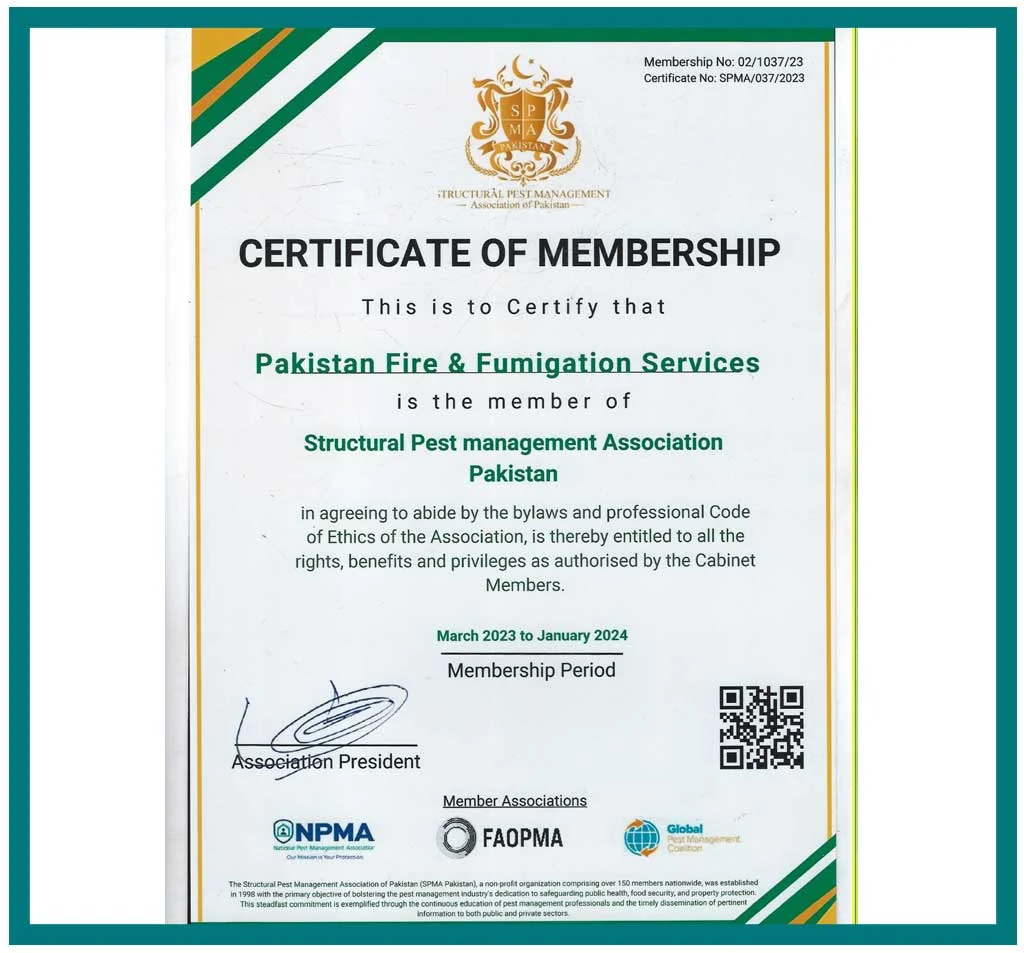
Our Certificates
What Our Clients Say
Muhammad Abdullah — 2022-06-02
Pakistan Fire & Fumigation is one of the best companies, offering mind-blowing customer service across Pakistan.
NAJAM ISLAM — 2022-06-02
Best fumigation in the town i must sayyy
Anas Amir — 2022-06-04
I have tried their fumigation service and hands down they are the best in karachi.
Javed Khan — 2022-06-05
Expert teams and very cooperative staff best work done in my house
Rafay Paracha — 2022-06-06
Best fumigation servies in Karachi! One should really try their services for a healthier environment.
Ahmed Shah — 2022-06-01
Best fumigation in town, I must say!