
Office Fumigation Services
Keep your workplace productive, compliant, and pest-free with office fumigation designed for modern Pakistani offices. Pakistan Fumigation plans treatments around your schedule—after-hours, weekends, or public holidays—so your team returns to a clean, safe environment without disruption. For a fast response, call +92 331 8496210 or request a site inspection.
Need a deep-dive on office-specific pest control in Karachi? See our dedicated page on pest control services for offices to understand common hotspots, inspection scope, and prevention tips for local buildings.
Why Offices Need Fumigation in Pakistan
Everyday pest pressure in modern offices
Open-plan floors, pantries, and false ceilings make offices comfortable for people—and surprisingly comfortable for pests. Warm equipment rooms attract cockroaches; desk snacks and pantry crumbs draw ants; and rarely accessed store rooms give rodents quiet spaces to nest. Even well-maintained offices see occasional spikes after staff events, rainy spells, or minor housekeeping gaps.
Hidden runways (cable ducts, service shafts, under-desk raceways) let pests move between departments unnoticed. Over time, a few sightings can become recurring complaints, particularly near pantries, washrooms, or lift lobbies. A structured office fumigation plan keeps pressure low and prevents small issues from turning into floor-wide downtime.
Pakistan-specific risk factors you can’t ignore
Seasonal rains and standing water around commercial buildings can increase mosquito breeding, which raises the risk of dengue and after-hours bites for security or cleaning crews. Power outages may interrupt HVAC or ventilation, creating indoor conditions where odors linger and pests search for new water and food sources. Multi-tenant buildings also share shafts and basements—so a neighbor’s infestation can quickly become yours unless there’s coordinated treatment and proofing.
Business impact you can feel
Uncontrolled pests cause real costs: employee complaints, reputational hits during client visits, contaminated pantry areas, and even damaged cabling or documents. In regulated environments, audit observations can trigger corrective actions and rescheduling. A preventive office fumigation program—with logs, signage, and clear re-entry guidance—limits emergency callouts and keeps management focused on business, not pests.
Pests We Target & Office-Safe Treatment Options
Cockroaches & ants
We prioritize low-disruption options for busy floors. Gel baits and crack-and-crevice applications target the pests where they hide without broadcast spraying across workstations. Small, measured bait placements go behind appliances, inside hinge gaps, and along warm equipment areas in server rooms and pantries. Residual spot treatments are reserved for harborages, not open desk areas, to minimize odor and downtime.
To sustain results, we pair treatment with practical housekeeping fixes: wiping sticky spills before closing, storing tea/sugar in sealed containers, emptying under-sink bins nightly, and monitoring any indoor plants for ant trails. Your visit report highlights the exact zones addressed and recommended prevention steps for facilities and housekeeping teams.
Mosquitoes
Fogging has its place, but source reduction prevents re-infestation. We inspect for breeding in basement sumps, floor drains, planter trays, and rooftop puddles. Depending on site risk and regulations, we may recommend ULV space treatment in non-occupied windows plus larviciding for stagnant points. Outdoor barrier applications at entryways reduce after-hours nuisance around guards and reception. Re-entry intervals and ventilation steps are shared in your job card so staff can return confidently the next day.
Rodents
Rodent programs are designed for safety and documentation. We deploy tamper-resistant bait stations near perimeters, service shafts, and loading areas—mapped on a station layout so you always know what’s placed where. Snap trapping or glue boards may be used in sensitive areas where bait isn’t appropriate. Proofing guidance covers door sweeps, brush seals, and sealing cable penetrations to cut off nightly ingress.
Termites inside offices
Partitions, wooden cabinets, and file storage rooms can conceal termite activity. We conduct a targeted inspection for mud tubes, hollow timber, or frass around skirting boards. Where confirmed, we recommend localized corrective treatment and, if needed, a broader plan with your building management for long-term structural protection. Our report clarifies what can be resolved at suite level and what requires base-building coordination.
Optional disinfection & sanitization
If you require disinfection for shared spaces, we schedule it separately from pest treatments to avoid cross-use conflicts and ensure proper contact times. Sensitive equipment, keyboards, and server racks are handled per your IT and facilities protocols, and we provide clear re-entry guidance based on the product label and ventilation needs.
Tip: If your HQ manages multiple Karachi floors or satellite offices, align pantry hygiene, after-hours access, and complaint logging across sites. Centralized coordination significantly reduces repeat callouts and keeps pest pressure consistently low across the portfolio.
Ready to plan your office fumigation? Book a free inspection via our Contact page or review our office pest control in Karachi overview for location-specific insights.
Compliance note: We follow product labels and safety data sheets, use least-disruptive methods first, and communicate re-entry intervals in writing. No claims about specific products or guarantees are made here; scope varies by site condition and audit needs.
How Our Office Fumigation Works
Step 1 — On-site inspection & risk assessment
Every office is different, so we begin with a structured walkthrough of your floors, cabins, pantries, washrooms, server rooms, and basements. Our technician maps hotspots, checks false ceilings and service shafts, and notes sensitive zones such as food-prep counters, prayer rooms, storage areas with important files, and rooms with limited ventilation. We also review building constraints—elevator access, generator rooms, and after-hours permissions—so the treatment plan is practical and disruption-free. In Karachi’s monsoon season or Lahore’s post-rain spells, we pay special attention to drains, rooftop puddles, and basement sumps where mosquitoes can breed and odors can linger. You receive an initial risk snapshot, so facility teams and housekeeping know exactly what to prepare before treatment day.
For larger corporate floors or multi-tenant towers, we request a basic layout (or create a simple sketch) to mark gel bait points, bait stations, and inspection tracks. This makes future follow-ups faster and keeps everyone aligned on where work has been done. Where we see structural gaps—door sweeps, brush seals, unsealed cable penetrations—we document them with practical recommendations rather than “nice-to-have” wish lists. The goal is simple: reduce pest pressure with the least chemical load and the least downtime.
Step 2 — Proposal with clear choices
After the inspection, you receive a written proposal with two pathways: a one-time corrective service for immediate relief, or a monthly Integrated Pest Management (IPM) plan for ongoing prevention. Each option outlines scope (target pests, priority zones), application types (e.g., gel baiting, crack-and-crevice work, ULV where appropriate), and safety guidance in plain language, not jargon. If you have audit requirements, we specify the documentation set you’ll get on every visit—job cards, station maps, and service logs—so your internal reviewers don’t need to chase for paperwork. Pricing is transparent on a per-site or portfolio basis, with clear notes on what drives cost: area, infestation level, and frequency.
Step 3 — Scheduling for minimal disruption
We plan treatments after-hours, on weekends, or during public-holiday windows so your teams return to a fresh floor the next day. In Pakistan, coordination with building security and lift operators is critical; we confirm access to risers, basements, and rooftops before arriving. You receive a short pre-visit notice you can forward to staff (WhatsApp/email) covering expected odors (if any), the re-entry window, and pantry/electronics preparation. For example, Karachi offices often prefer Friday night work so the floor can air out naturally through the weekend; in Lahore, we may suggest early-morning ventilation before staff arrival to manage cooler morning conditions.
Step 4 — Treatment day: what to expect
Our crew arrives in uniform with PPE, signage, and a service checklist tied to your plan. We start with low-odor, office-safe methods (gel baits, targeted crack-and-crevice application), then move to perimeter and utility areas, and only use space treatments where suitable and agreed. Sensitive equipment and documents are respected; server rooms and file rooms are handled with non-disruptive techniques and careful placement. Before leaving, we remove temporary waste, collect applicator materials per protocol, and walk a quick quality check with your representative. You’ll see door tags or small signs that mark treated zones to inform late-night cleaners or security.
- Signage placed at treated areas and entry points
- Tamper-resistant rodent stations mapped and labeled
- Photos/logs recorded where your policy allows
- Brief verbal handover + written visit report
Step 5 — Re-entry & post-treatment follow-up
Re-entry guidance is always based on product labels and your ventilation conditions—typically, air the floor and allow the specified interval before staff return. We provide a simple checklist for the next morning: open blinds, run HVAC on fresh air if available, wipe pantry preparation surfaces, and keep bait placements undisturbed. You’ll also get quick housekeeping tips specific to your space, such as nightly bin clearance in pantries, sugar/tea storage in sealed containers, and checking live plants for ant trails. If you notice pest activity between visits, our callout response window and support channel are clearly stated on the job card.
Monthly Office Fumigation Contracts
What’s included in an IPM plan
A monthly contract turns sporadic fire-fighting into clean, predictable prevention. Scheduled inspections and targeted treatments keep cockroach and ant activity low in pantries and washrooms, while rodent stations along perimeters and shafts are serviced and documented. For mosquito risk, we combine larval source reduction in drains and sumps with periodic exterior barriers or ULV windows where appropriate. We rotate treatment methods responsibly to reduce resistance and odor fatigue in occupied offices. The result: fewer complaints, fewer emergency callouts, and a healthier baseline for staff and visitors.
Documentation & audit readiness
Each visit generates a job card, service log, and (where applicable) a bait-station map so you can answer auditor questions in minutes. If your head office in Karachi oversees branches in Lahore or Islamabad, we create a shared folder structure or email thread cadence to keep records tidy across sites. On request, we provide material Safety Data Sheets (SDS) and risk assessments relevant to your plan, so Health & Safety teams have everything they need. Over time, these records also help track trends—seasonal spikes, complaint hotspots, or doors that need renewed sealing—so budgets go to the fixes that matter.
SLAs, callouts & communication
Your agreement defines a response window for urgent sightings (e.g., same-day or next-business-day) and a communication channel your facility team actually uses (WhatsApp group + email summary). Routine visits are scheduled in advance, and we coordinate with your cleaning vendor to reduce double work. If you’re hosting a board meeting or client event, we can shift a visit into the preceding quiet window so the space is inspection-ready. The SLA is practical—clear enough to enforce, flexible enough to handle real-world calendar changes.
Multi-site coordination
For corporate portfolios, a single point of contact simplifies everything—quotes, schedules, documentation, and invoicing. We standardize complaint logging across sites so patterns are obvious and solutions are consistent. Karachi towers with basement parking need a different rodent strategy than compact Lahore offices near busy markets; our plans account for these differences without creating paperwork chaos. Whether you add a new floor, shift to a larger office, or consolidate, we update the plan and station maps so the next audit goes smoothly.
Ready to switch from reactive callouts to predictable prevention? Request a monthly plan through our Contact page and ask for an IPM proposal tailored to your office size and schedule.
Health, Safety & Eco-Conscious Options
People-first safety protocols
Your staff’s safety comes first. Before any visit, we share a brief notice you can circulate to employees and building security, clarifying the scope, any expected odors, and re-entry guidance. On the day, our team arrives in uniform with PPE and places clear signage at treated areas so late-night cleaners and guards are informed. We begin with the least disruptive methods and escalate only where the risk profile demands it, keeping applications targeted and away from open desk areas. After treatment, we review re-entry intervals and simple ventilation steps so the office feels normal when your team returns.
We also document the materials categories used and the zones treated in a concise visit report. Where your policy allows, we include photos of bait placements and marked stations to avoid accidental disturbance by cleaning crews. For recurring plans, those details roll into a lightweight site history so you can track which floors and rooms were serviced and when. That transparency makes internal approvals faster and gives facility managers what they need for audits—without jargon or guesswork.
Low-odor choices and responsible chemistry
For busy office floors, low-odor matters. We prioritize gel baits, insect growth regulators (IGRs), and crack-and-crevice applications inside enclosed spaces, reserving broad space treatments for suitable windows and non-occupied conditions. This “target first” approach reduces lingering smell and keeps workstations, keyboards, and documents unaffected. Where mosquitoes are a concern, we recommend source reduction and larval control before considering ULV applications, and we time those for after-hours to minimize disruption.
Responsible rotation helps prevent resistance and reduces “chemical fatigue” in occupied workplaces. We review your recent service history and tailor the plan by zone—server rooms, pantries, lift lobbies, basements—so each area gets the minimum effective intervention. If your leadership prefers options with reduced odor profiles, we can propose a tiered plan that specifies which areas receive baits only and which receive targeted residuals, along with ventilation notes to keep indoor air quality comfortable the next day.
Protocols for sensitive zones
Some spaces need extra care. In IT rooms, we avoid broadcast treatments and place tiny bait dots or traps along cable raceways, rack bases, and warm appliance zones, keeping airflow and equipment safety in mind. In pantries, we coordinate with housekeeping to temporarily clear open food and then reinstate items only after re-entry time is complete, so contamination risks stay near zero. For prayer areas and quiet rooms, we prioritize non-intrusive measures and schedule any necessary work strictly after-hours with extended ventilation.
Where young visitors or allergy-sensitive staff are present, we adapt with added signage, caution around soft furnishings, and alternative placements away from reach. If your building has daycare corners or ground-floor waiting lounges, we flag them in the proposal and set a conservative re-entry buffer. The aim is simple: thorough control, minimum disruption, and clear communication so everyone feels safe.
Where We Serve
Primary hubs: Karachi, Lahore, Islamabad
Our teams regularly serve corporate offices in Karachi, Lahore, and Islamabad, adapting plans to each city’s building styles and schedules. Karachi’s coastal climate and high-rise basements often call for robust rodent and mosquito monitoring, while Lahore’s seasonal rains can spike ant and mosquito pressure near entryways. Islamabad business parks may have larger green belts and surface drains that need routine inspection alongside indoor preventive work. We plan visits around your actual occupancy patterns, not a one-size-fits-all calendar.
If you manage multiple sites, we can align them under a single portfolio plan with shared reporting and a consistent complaint-logging format. That way, trends are visible across locations and fixes are applied faster. Multi-city coordination also helps standardize pantry hygiene rules, access protocols, and re-entry notices so staff experiences are consistent regardless of city.
Surrounding areas and multi-site rollouts
Beyond the major hubs, we can extend coverage to surrounding business districts where scheduling allows. For rollouts—such as new branch openings or floor expansions—we slot inspections into your fit-out timeline, marking pest-risk hotspots before furniture is fixed. This prevents “invisible” harborage in false ceilings and service shafts that later trigger complaints. We keep the same documentation format across locations so audits remain simple even as your footprint grows.
For periodic campaigns—like pre-monsoon mosquito reduction—we stage site clusters on consecutive days, ensuring materials and teams are allocated efficiently. That translates into predictable budgeting and fewer ad-hoc callouts through peak seasons. Your account manager remains your single point of contact for dates, access, and status updates across the portfolio.
Industries & Office Types We Support
Corporate HQs, banks, and professional services
Executive floors, meeting suites, and client-facing lobbies can’t afford pest sightings. We design discreet, after-hours treatments with low-odor options for high-traffic weekdays, and we coordinate closely with security for access to lift machine rooms, rooftops, and basements. Document control areas and records rooms receive targeted monitoring to protect paper archives from insects and rodents. Job cards are concise and audit-friendly so compliance teams can file them quickly.
In bank branches and operations centers, we map perimeter bait stations and mark them clearly for service continuity. Pantry and ATM rooms get special attention for ants and cockroaches, with small bait placements that don’t interfere with staff or equipment. We also build in rapid response windows for branches that experience sudden spikes after nearby construction or rainy spells.
Tech, BPO, co-working, and creative spaces
Tech floors and BPO operations run late and often share amenities across multiple tenants. We plan gel baiting and targeted treatments around shift changes to avoid downtime. Server rooms and editing suites receive minimal, equipment-safe methods with careful documentation so nothing is moved or obstructed without approval. For co-working spaces, we add tenant-friendly signage and short prep lists that community managers can share with members ahead of visits.
Breakout zones, snack corners, and coffee points are common pest hotspots in flexible offices. We pair precise treatment with easy housekeeping rules—sealed snack bins, nightly crumb checks, and plant-soil monitoring—to keep complaints low. Over time, the combination of light preventive steps and targeted interventions reduces the need for heavier measures.
Clinics inside office towers and retail-office complexes
Medical suites embedded in office towers require careful timing and clear re-entry windows. We coordinate with clinic managers to protect patient areas and equipment, focusing on concealed harborages rather than open spaces. For retail-office complexes, back corridors, refuse rooms, and loading bays are mapped for rodent control and cleaned as part of the visit plan when feasible, keeping pests from migrating onto office floors.
If your site includes storage rooms or light warehousing attached to administrative offices, we align those zones within the same plan so perimeters, doors, and utility paths are treated coherently. That unified approach prevents reinfestation cycles caused by uncoordinated schedules between office and storage areas.
What Affects Cost
Key variables that drive pricing
Budgets depend on practical factors: total floor area, number of levels, infestation severity, and whether you choose a one-time corrective visit or a monthly contract. Sensitive zones such as server rooms and pantries add complexity because they require specific methods and extra coordination. If your internal policies require detailed documentation or photos, we plan that into the scope rather than treating it as an afterthought. Multi-site portfolios benefit from standardized plans, which reduce duplication and keep unit costs predictable over time.
Where rodent risk is high, consolidating station layouts across adjacent floors reduces service time and makes audits simpler. For mosquito-prone sites, fixing drainage or sealing planter trays is a one-time improvement that cuts recurring effort and cost. The more we tune the plan to the actual site risks, the less you spend on broad, low-yield measures.
How to get a precise quote
The fastest route is a short call to outline floor count, approximate area, and the top three complaint hotspots. We’ll recommend either a one-time corrective visit or a monthly plan and provide a crisp scope with re-entry guidance. For multi-city portfolios, share a basic list of locations so we can propose a unified contract and documentation set. You’ll know exactly what’s included, what’s optional, and how scheduling affects cost—no surprises later.
Prefer to keep things simple? Call +92 331 8496210 and ask for an office inspection slot. A quick walkthrough yields a tailored plan that balances safety, low odor, and measurable results without overspending.
Proof of Professionalism
Clear paperwork and traceability
Prefer to keep things simple? Call +92 331 8496210 and ask for an office inspection slot. A quick walkthrough yields a tailored plan that balances safety, low odor, and measurable results without overspending.
If your policy allows, we attach a few photos of stations or key placements to help cleaners avoid disturbing critical points. Over time, these records form a concise service history that supports trend analysis—identifying seasonal spikes, hotspots, or proofing gaps that deliver the best return when fixed.
Trained technicians and on-site supervision
Our teams are briefed on your floor plan and sensitive zones before arrival, and the technician-in-charge walks through the plan with your representative at the start and end of each visit. We use the least-disruptive methods first and escalate only when the risk profile demands it. That balance keeps staff comfortable while maintaining effective control.
Where multi-floor access or out-of-hours permissions are required, a supervisor coordinates sequencing to avoid lift bottlenecks and to ensure signage, bait stations, and documentation are in place before the team leaves the site.
Coordination with your vendors and building management
Great outcomes depend on great coordination. We work with your cleaning vendor to align prep and reinstatement tasks, and we liaise with building security for access to rooftops, basements, and risers. If your office shares shafts or corridors with neighboring tenants, we can recommend synchronized measures that reduce reinfestation risk without creating scheduling chaos.
When renovation or IT moves are planned, we adjust treatment windows so effort goes into final configurations rather than temporary setups. This saves budget and prevents repeat visits that add little value.
All Services
Call Us Today
(+92) 331 8496210
We offer pest control services for individuals, businesses, and corporations. Contact us for a free inspection.
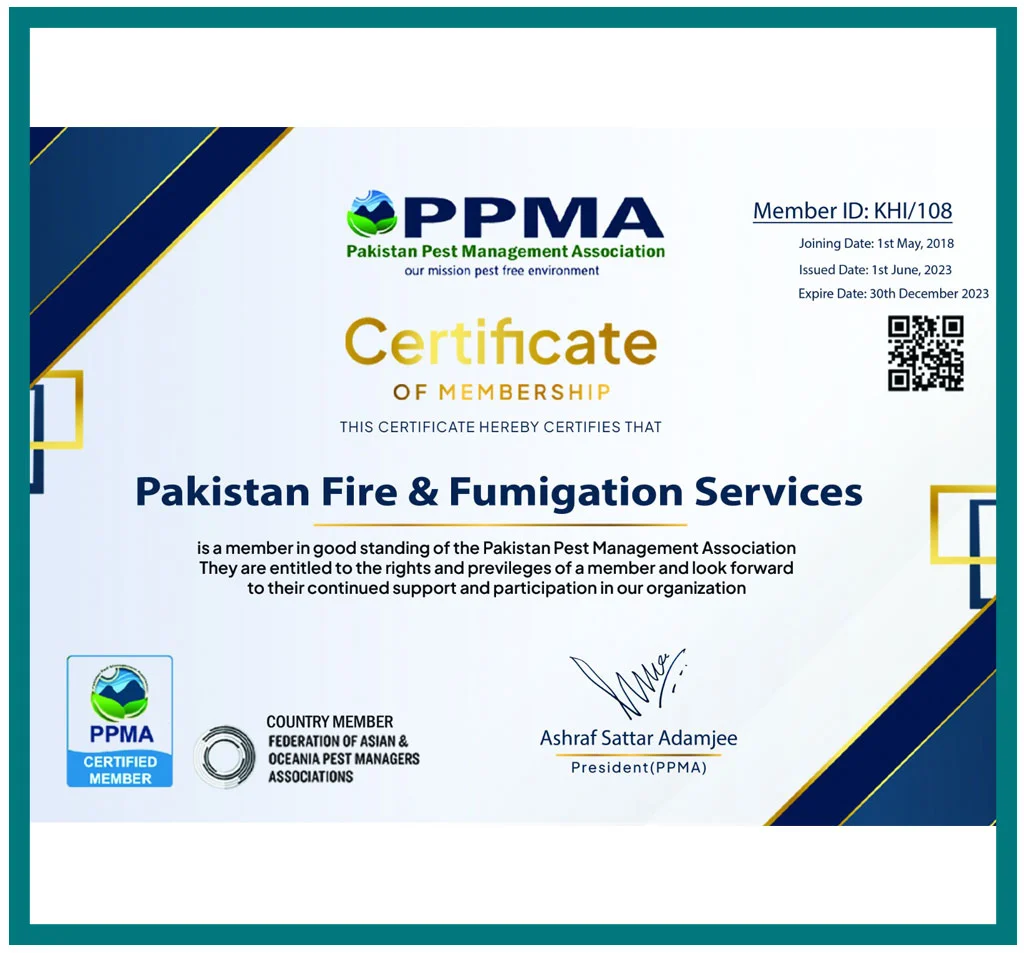
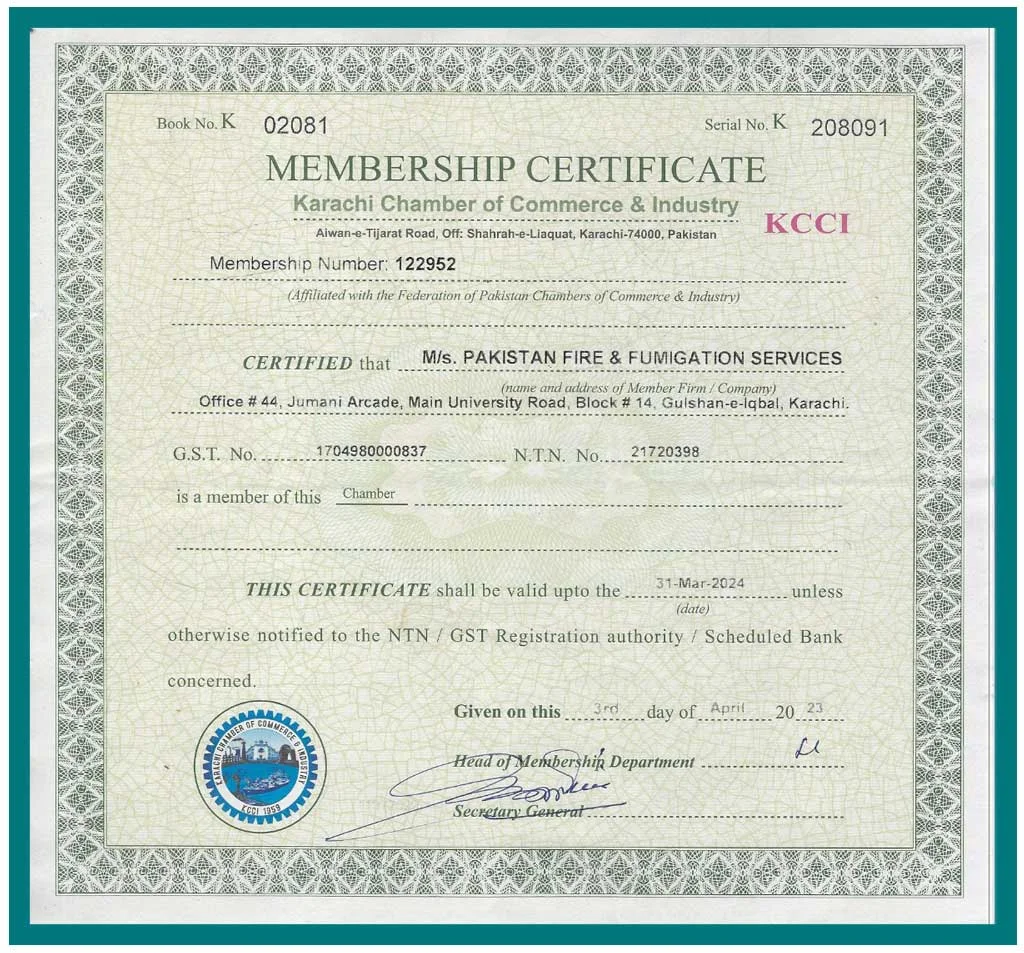
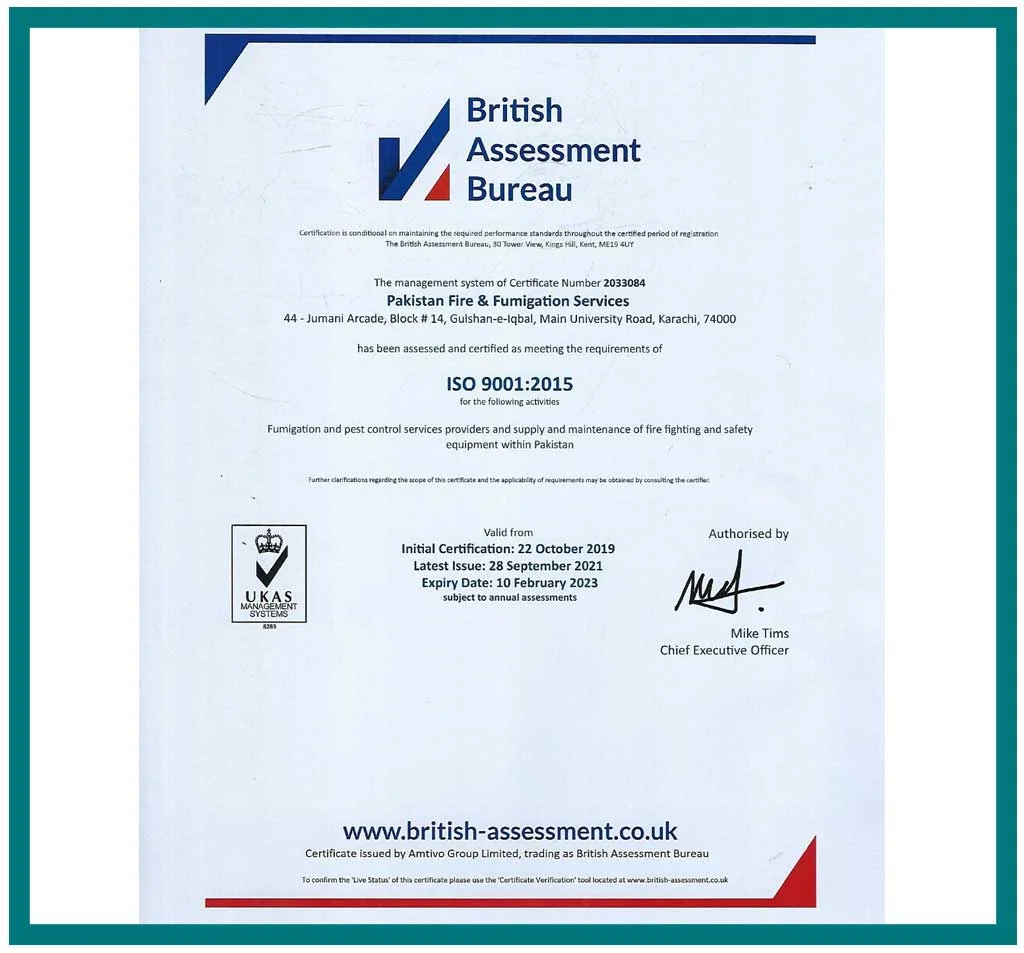
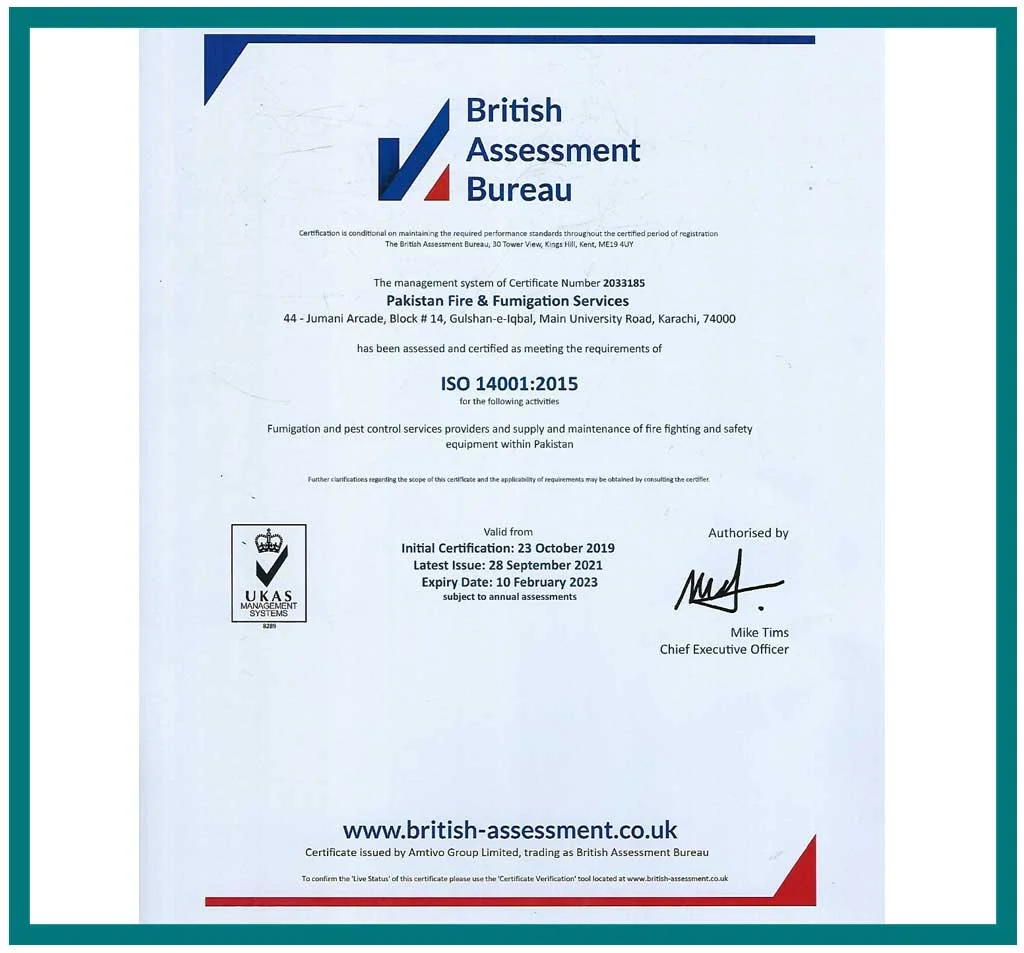
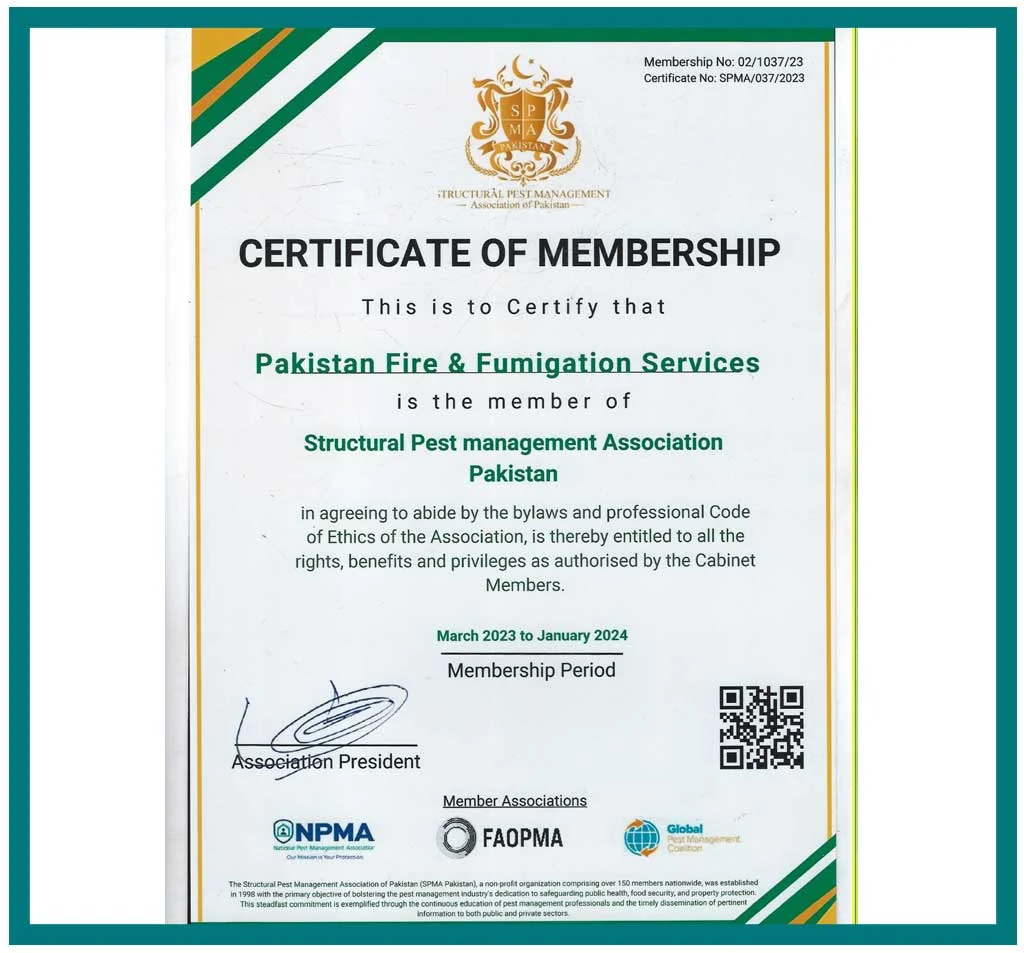
Our Certificates
What Our Clients Say
Muhammad Abdullah — 2022-06-02
Pakistan Fire & Fumigation is one of the best companies, offering mind-blowing customer service across Pakistan.
NAJAM ISLAM — 2022-06-02
Best fumigation in the town i must sayyy
Anas Amir — 2022-06-04
I have tried their fumigation service and hands down they are the best in karachi.
Javed Khan — 2022-06-05
Expert teams and very cooperative staff best work done in my house
Rafay Paracha — 2022-06-06
Best fumigation servies in Karachi! One should really try their services for a healthier environment.
Ahmed Shah — 2022-06-01
Best fumigation in town, I must say!