
Grain Fumigation Services
If you export food commodities or manage stored grain, you need fumigation that is safe for people and cargo—plus documentation that clears inspections without delay. Pakistan Fumigation delivers container and grain fumigation for exporters, freight forwarders, warehouses, mills, and traders across Pakistan. From Karachi ports and ICDs to up-country warehouses, our team plans the correct dosage, conducts gas monitoring, manages exposure and aeration, and hands over the right certificate set for your shipment or storage cycle.
Call/WhatsApp: +92 331 8496210 — Get a same-day quote and schedule.
Trust & Coverage at a Glance
Practical, compliance-minded service
We focus on two outcomes: (1) effective pest control in line with accepted practices for edible commodities, and (2) paperwork that helps you satisfy port, customs, and receiver expectations. Our job is to combine sound fumigation technique with clear, shipment-ready documentation so you can move cargo without avoidable queries.
Because export and storage needs differ, we adapt the fumigation plan to the commodity, packaging, container condition, and site constraints. That means matching dosage to the job, monitoring gas levels during exposure, and clearing the area only once readings are within acceptable limits before handover.
Nationwide reach with on-site execution
Whether you’re loading a container at a Karachi yard, holding wheat stacks in a Lahore warehouse, or preparing rice for dispatch near Islamabad, we come to your site to seal, place fumigant, and monitor the cycle. Our team works with facility managers, freight forwarders, and security staff to coordinate safe work zones and controlled aeration areas—particularly important at congested yards and mill premises.
For time-sensitive export bookings, we prioritize shift planning to align with gate-in, cut-off, and vessel schedules where feasible. Clear communication about your dispatch date helps us plan exposure timing and certificate issuance appropriately.
Certificates aligned to shipment and storage needs
For export containers, we issue a fumigation certificate along with monitoring and aeration notes. For stored-grain jobs (warehouse, silo, or tarped stacks), we provide a job-specific certificate that records the site, commodity, exposure period, and clearance status. When wood packaging material (WPM) is involved, we’ll clarify whether you need ISPM 15 treatment for pallets/crates versus standard container fumigation for cargo, and we can coordinate the correct path where applicable.
The goal is simple: ensure your documentation matches what the receiver or shipping stakeholder expects so you don’t get tied up in rework, re-fumigation requests, or costly delays.
Who We Serve
Exporters, freight forwarders & consolidators
If you’re moving FCL or LCL containers, we plan fumigation around your booking windows and provide the exact certificate your line or buyer requests. We also help forwarders who assemble multiple consignments to ensure the final container has an auditable fumigation trail (placement, exposure, aeration, and clearance), reducing the risk of queries at transshipment or discharge ports.
For last-minute yard requests, we’ll advise what is realistic based on container condition, ventilation areas available for aeration, and your required handover time. The earlier you share shipment details, the more options we can offer—especially for urgent cut-offs.
Grain handlers, millers & commodity traders
Stored grains—wheat, rice, maize, pulses, and spices—face pressure from weevils, beetles, and moths. We tailor plans to your commodity and stack design, lay proper tarping/sealing where needed, and monitor gas distribution during exposure. Because mills and traders operate on tight turnover schedules, we coordinate re-entry timing and clearance to minimize disruption while protecting grain quality and buyer requirements.
We can also review your storage hygiene and recommend practical steps—screening, patching, sanitation, and IPM measures—to reduce re-infestation risk between fumigation cycles
Warehouse & silo operators
Warehouses and silos carry unique constraints: large volumes, mixed commodities, and busy loading activity. We segment work areas, plan controlled aeration zones, and document stack maps so your team knows exactly which stacks are under treatment. For silos, we align with your safety protocols and access rules, and we’ll agree on gas monitoring points and clearance criteria before starting.
Because logistics costs compound quickly at warehouses, we emphasize predictable scheduling, clear signage, and clean handovers—so your operations team can restart routine handling with confidence.
Services We Provide
Container Fumigation for Export Cargo
Export containers face two challenges: protecting the cargo from stored-product pests and satisfying the documentation expectations of shipping lines, customs, and receivers. Our container fumigation service is designed for both. We plan dosage according to container size and cargo type, seal correctly, place the fumigant, monitor gas during exposure, and manage aeration in a controlled area before clearance. This end-to-end approach keeps your shipment on schedule while reducing the risk of re-inspection or re-treatment at destination.
Typical use cases: rice, wheat, maize, pulses, spices, seeds, animal feed, and mixed food consignments. We also handle non-food cargo that may require treatment for biosecurity reasons, subject to rules at destination.
Fumigants: Phosphine is our standard for edible grains and many food commodities. If a destination’s rules specify a different treatment category (for example, quarantine & pre-shipment measures for certain materials), we’ll advise whether an alternative pathway applies and what that means for your schedule and documentation.
What you receive at handover: a job-specific fumigation certificate for the container, a simple monitoring/aeration note, and guidance on how to present the documents to your forwarder or line. Where helpful, we can add job photos of seal placement and signage on request to support your audit trail.
Operational notes for Pakistan exporters: at busy Karachi yards and ICDs, aeration space and shift timing are critical. Share your gate-in/cut-off details with our coordinator; we will plan exposure timing accordingly and agree realistic release windows. For fragile pack-outs (e.g., printed cartons or moisture-sensitive commodities), we’ll discuss packing precautions and labeling so that the container remains compliant and easy to identify during handling.
Grain Fumigation
Stored grains are a valuable target for weevils, borers, and beetles. Our grain fumigation service is built to treat bulk, bagged, or stacked commodities in warehouses and silos while maintaining a food-grade handling standard. We start with a site survey and stack map, patch potential leaks, and ensure tarping and sealing are adequate before dosing. During exposure, we track readings at planned points so that gas distribution remains effective. After the exposure period, we manage controlled aeration and clear the area for safe re-entry only after our readings are within accepted limits.
Commodities covered: wheat, rice, maize, pulses/legumes, oilseeds, and spices—plus blended or fortified products where packaging and temperature conditions permit. Each commodity and packaging style can influence sealing strategy, exposure timing, and aeration planning.
Food-grade handling: we maintain clean placement zones, avoid contact between fumigant packaging and food product, and instruct staff on signage and restricted access during exposure. For mill environments, we coordinate with production schedules to minimize downtime and clearly mark treated stacks to avoid accidental movement prior to clearance.
Target pests (examples): rice weevil, lesser grain borer, red flour beetle, cigarette beetle, warehouse moths, and allied stored-product pests. If you have evidence of resistant populations or repeat infestations, we’ll discuss integrated steps to reduce pressure between cycles (sanitation, screening/patching, infested sweep removal, and proofing of common entry points).
ISPM 15 Treatment for Wood Packaging
ISPM 15 covers wood packaging material (WPM) such as pallets and crates. It is separate from container fumigation for cargo. If your shipment uses WPM for export, you may need ISPM 15 treatment and marking. We can coordinate the appropriate treatment and documentation pathway so that your pallets/crates meet receiver expectations. If your cargo is fully on compliant WPM or non-wood packaging, we will clarify whether ISPM 15 applies or whether standard container or grain fumigation is sufficient for your case.
When you might need both: many export consignments require only one pathway, but some shipments involve both WPM compliance and container/cargo treatment. We’ll help you decide what is necessary so you neither over-treat nor risk queries at destination.
“Food-Grade” & Eco-Aware Options
Clients increasingly ask for chemical-reduction strategies. We support this with realistic, case-by-case advice. Where conditions allow, hermetic storage, improved sealing, temperature management, and stronger sanitation can reduce the frequency of chemical treatments. In some controlled settings, modified atmospheres may be feasible for certain commodities; in other cases, these alternatives aren’t practical due to volume, timing, or facility constraints. We’ll give you an honest recommendation—no promises that ignore commodity risk or shipment deadlines.
Integrated Pest Management (IPM): the most reliable way to lower future treatment needs is to remove what attracts pests in the first place. That means tight house-keeping schedules, fast removal of spillages, screening/patching around doors and vents, routine inspection of incoming lots, and clear FIFO stock rotation. If you want a structured program, we can map a simple IPM plan for your warehouse or mill and align it with seasonal peaks and your production calendar.
Learn more about our company and services on Pakistan Fumigation.
How the Process Works
From survey to safe handover
1) Site or container survey: We confirm the commodity, packaging, container condition, stack design, and any receiver or line requirements. For warehouses, we map stacks and identify sealing/patching needs; for containers, we check door gaskets, vents, and labeling space.
2) Sealing & dosage plan: Based on volume, temperature, and risk level, we set a dosage and sealing approach. In warehouses, this may include tarping and leak checks; for containers, it includes proper tape sealing around doors and openings as needed to support gas retention.
3) Fumigant placement: We place the fumigant in a way that avoids direct contact with food products or sensitive packaging. Placement is documented for traceability.
4) Gas monitoring during exposure: We take readings at planned points to confirm effective distribution. If readings are off-target, we troubleshoot sealing or stack configuration before proceeding.
5) Exposure period: We maintain signage and restricted access. The exact duration depends on commodity, temperature, and treatment goals. We coordinate exposure windows to align with your dispatch schedule or production downtime where possible.
6) Aeration & clearance: We ventilate in a controlled area and only clear the site or container for re-entry/dispatch once readings are within accepted limits. We then remove signage and restore normal access.
7) Certificate & handover: You receive the job-specific fumigation certificate plus a simple monitoring/aeration note. For export shipments, we also provide clear guidance on how to submit documents to your forwarder or line at the time of gate-in.
Safety, labeling & re-entry
Safety starts at planning: we designate a work zone, apply warning signage, and coordinate with your team on who can access the area. During exposure, we keep the zone restricted, maintain the log, and plan aeration so that bystanders and adjacent operations remain protected. Re-entry happens only after our clearance readings indicate it’s appropriate for normal handling.
For containers, we label the doors with treatment details and re-entry guidance. For warehouses, we mark each treated stack so handling staff can avoid movement until clearance.
Exporters vs. storage operators—what changes
Export containers are time-bound; the plan focuses on meeting your booking window and issuing documentation for customs and shipping lines. Warehouse and silo treatments prioritize stack integrity, food-grade handling, and continuity of operations (e.g., keeping adjacent bays working while one zone is under treatment). In both cases, the deliverable is the same: effective control plus paperwork that supports your next step in the supply chain.
Compliance, Certificates & Documents You Receive
Fumigation certificate
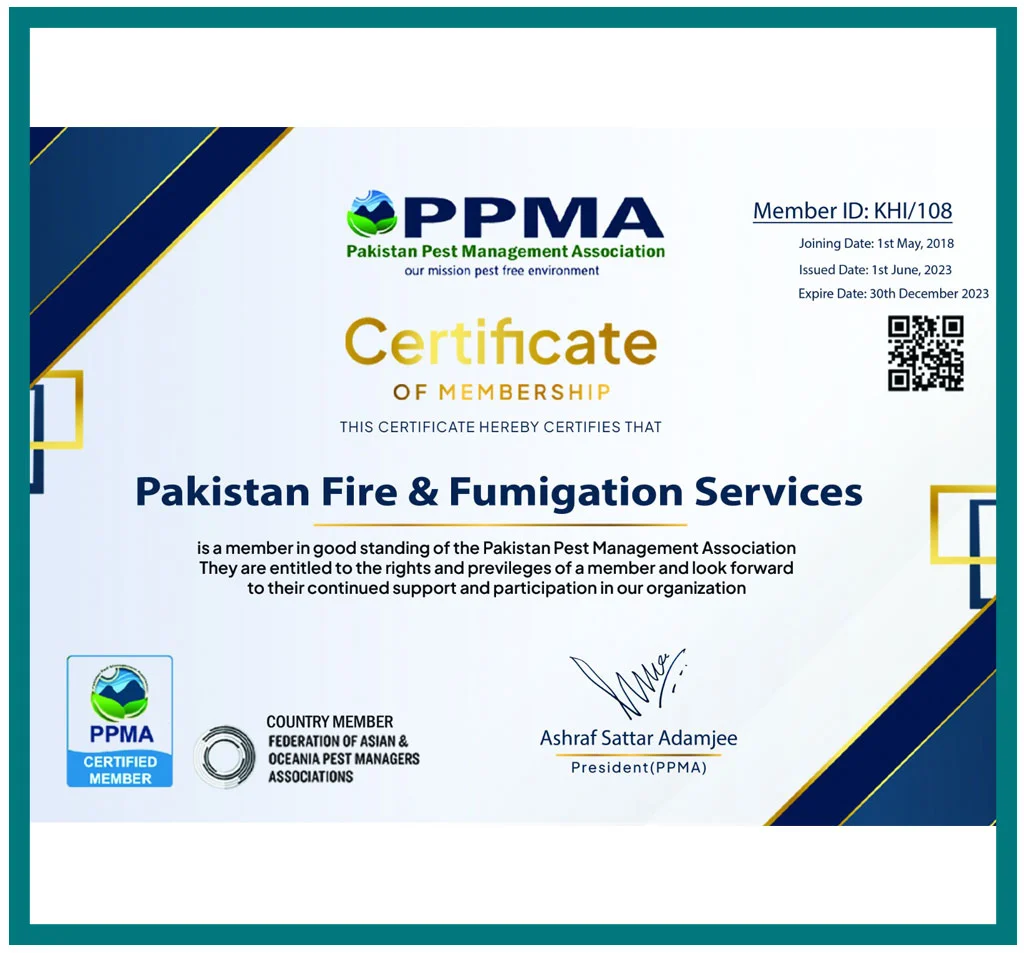
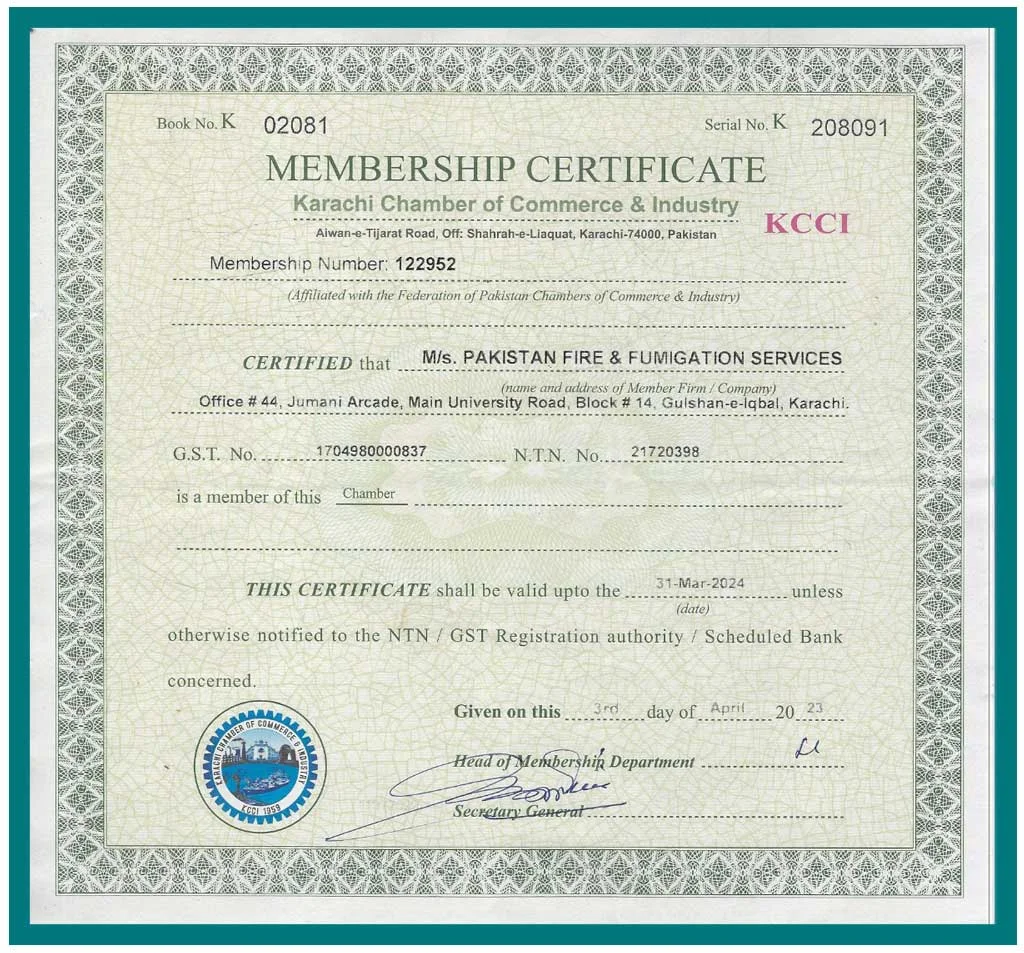
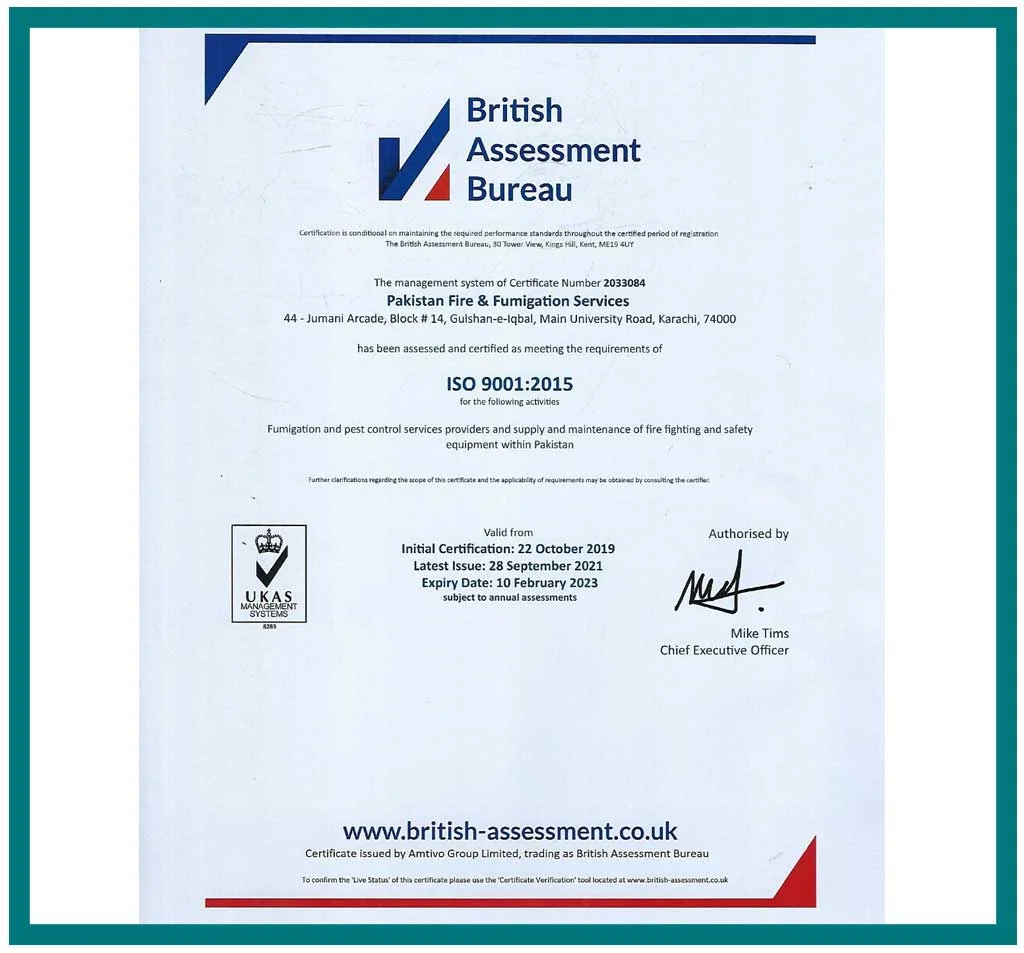
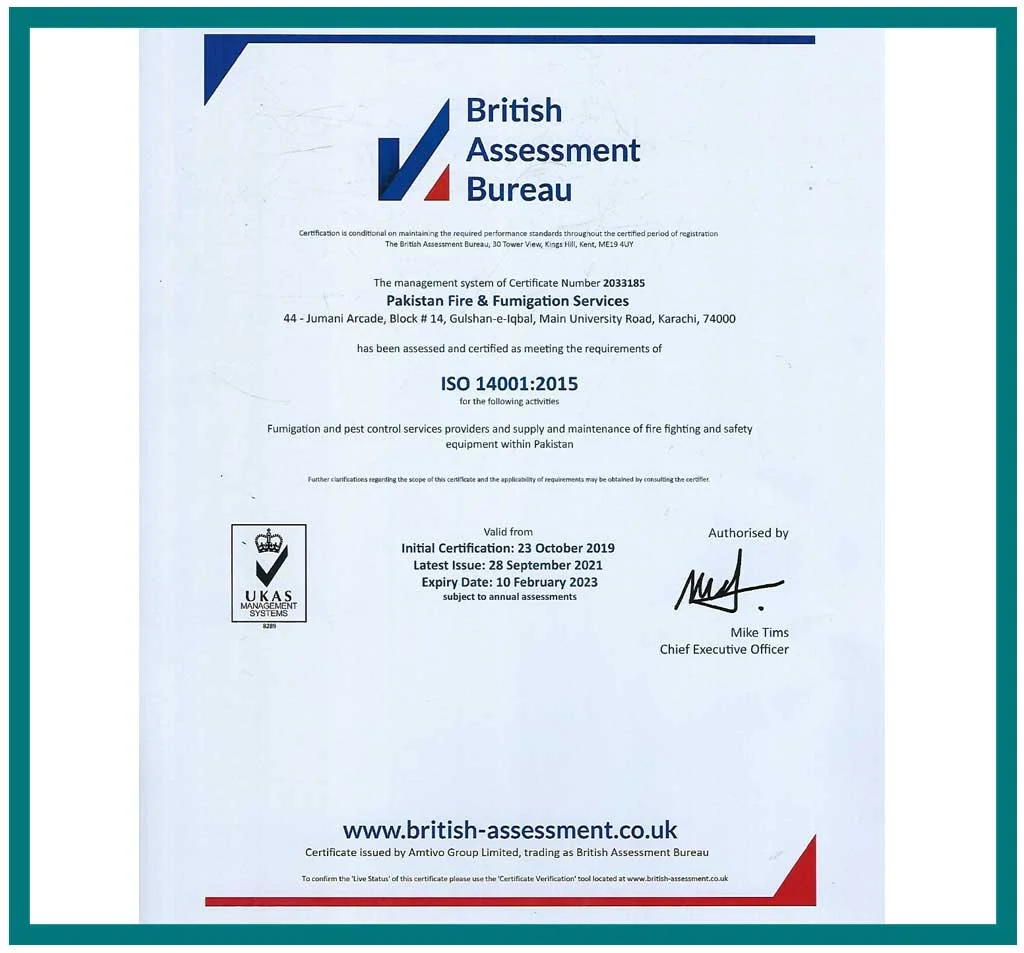
Each job includes a certificate that documents the site/container, commodity, exposure dates, and clearance. For export work, you’ll also receive a brief monitoring/aeration note. These documents are prepared in a format commonly requested by forwarders and lines in Pakistan to minimize queries at gate-in or destination.
To see examples of what you’ll receive, visit our Certificates page.
When ISPM 15 applies
ISPM 15 relates to wood packaging material (WPM)—pallets and crates—not the cargo itself. If your export uses WPM, you may need ISPM 15 treatment and marking. If your shipment uses compliant WPM or non-wood packaging, standard container or grain fumigation may be sufficient for pest control—but it isn’t a substitute for ISPM 15 when the latter is required. We’ll clarify the correct path so you don’t over-treat or, worse, face a compliance gap.
Submitting documents to forwarders, yards, and lines
We’ll tell you exactly which document to share with which stakeholder and when: forwarder at booking time, yard at gate-in, and line if asked. If your buyer wants copies before dispatch, we can share the file set with the authorized email/number you provide, so your shipment information remains aligned end-to-end.
Where We Operate
Karachi & ports
Most export fumigations schedule around yard congestion, gate-in, and vessel cut-offs. Share your dates, and we’ll align exposure and aeration so your container is ready for release with documentation in hand. For warehouse jobs around Karachi, we plan controlled aeration zones that keep neighboring bays working safely.
Lahore & up-country ICDs
Up-country exporters often face tight inland transfer windows. For Lahore and surrounding ICDs, we coordinate with your forwarder to ensure the treatment window supports your trucking plan. For bulk or bagged wheat/rice, we can also stage stack treatments to match your daily loading capacity. See our dedicated warehouse service overview here: Fumigation Services for Warehouses.
Islamabad/Rawalpindi region
We cover mill and warehouse work in the Islamabad/Rawalpindi area, with plans tuned for site ventilation and neighborhood sensitivities. If you’re preparing export cargo from up-country, we can coordinate with your forwarder so treated goods move smoothly toward the port.
What Affects Price & Lead Time
Commodity, volume & configuration
Different commodities and packaging configurations change sealing strategy and exposure time. Bulk vs. bagged grain, mixed SKUs in a single container, or tall stack designs can alter time-on-site and monitoring needs. Larger volumes or multiple containers benefit from batch planning but may extend the overall window.
Site access, sealing conditions & shift timing
Container condition (gaskets/vents), warehouse leak points, and the availability of safe aeration zones influence the effort required. Night or weekend shifts to meet a cut-off may add crew and coordination cost. Sharing your gate-in, cut-off, or production schedule up front lets us recommend the most cost-effective plan.
Documentation set & special requests
Standard export or warehouse certificates are included. Additional copies, job photographs, or special notations requested by a buyer or receiver are available on request. If you’re building a longer-term program to reduce treatment frequency, consider an IPM plan—see our IPM Services.
How to get a precise quote
Send your commodity, quantity/volume, site address, preferred dates, and any buyer or line requirements. We’ll reply with scope, timeline, and a clear price. If you’re ready to schedule, use our Contact page or call/WhatsApp +92 331 8496210.
All Services
Call Us Today
(+92) 331 8496210
We offer pest control services for individuals, businesses, and corporations. Contact us for a free inspection.
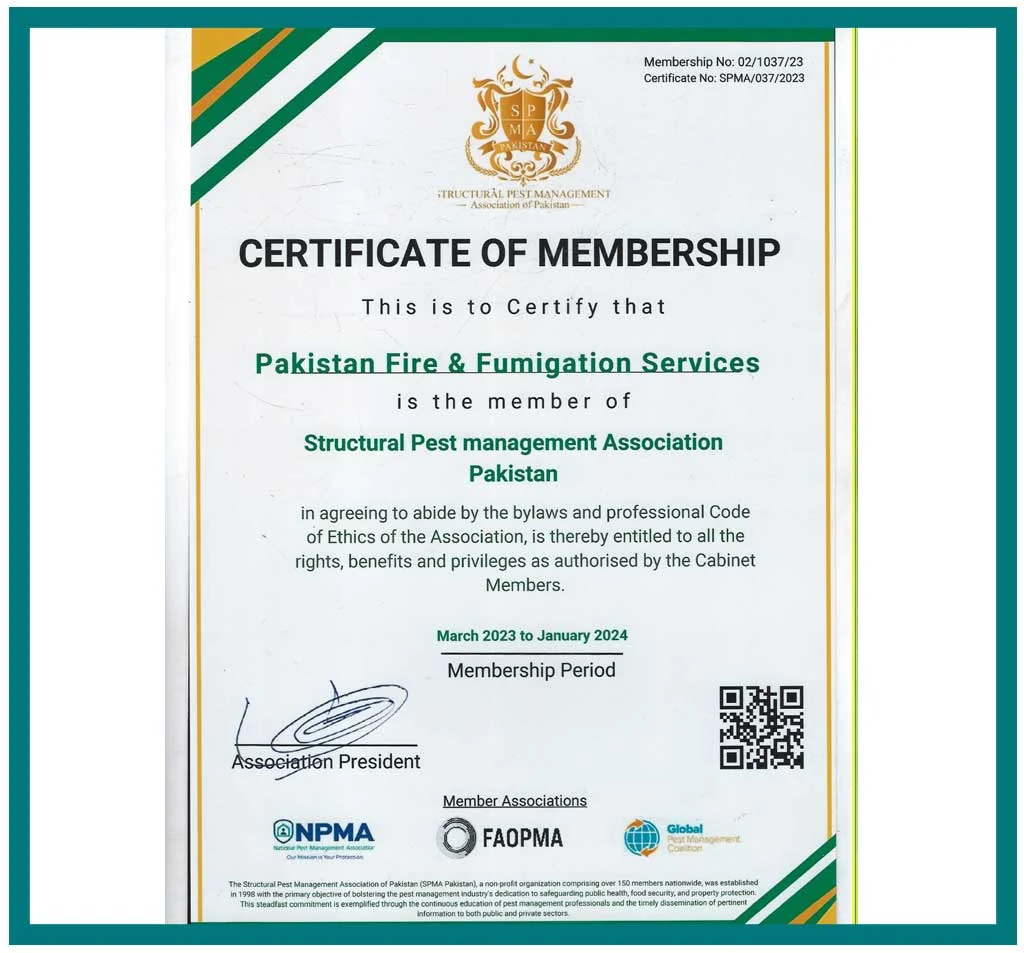
Our Certificates
What Our Clients Say
Muhammad Abdullah — 2022-06-02
Pakistan Fire & Fumigation is one of the best companies, offering mind-blowing customer service across Pakistan.
NAJAM ISLAM — 2022-06-02
Best fumigation in the town i must sayyy
Anas Amir — 2022-06-04
I have tried their fumigation service and hands down they are the best in karachi.
Javed Khan — 2022-06-05
Expert teams and very cooperative staff best work done in my house
Rafay Paracha — 2022-06-06
Best fumigation servies in Karachi! One should really try their services for a healthier environment.
Ahmed Shah — 2022-06-01
Best fumigation in town, I must say!